
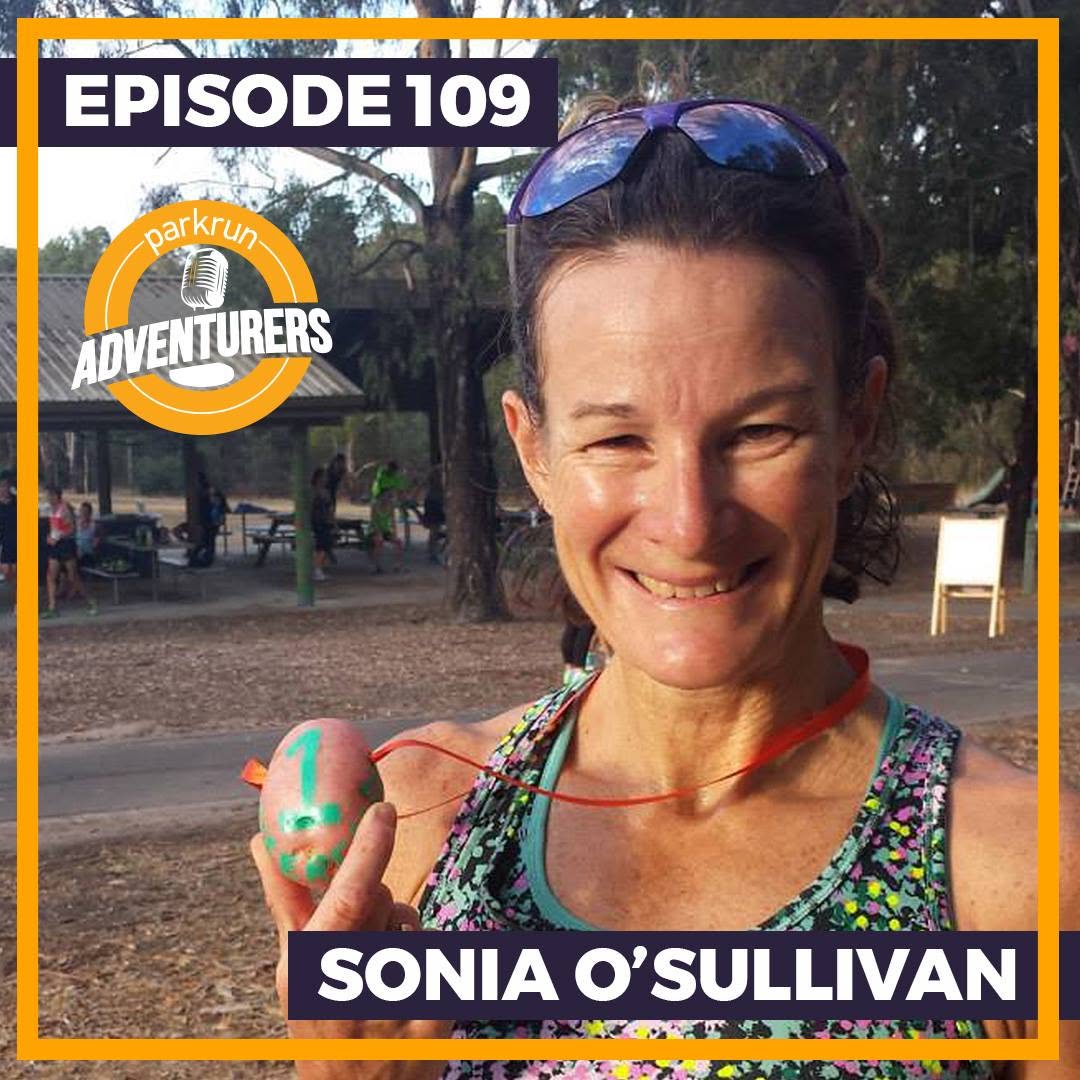
 — open the full-size cover
Episode 109 - Sonia O'Sullivan
Episode details · · 280 speaker turns · sound cues from context
Enhanced transcript
Speaker names appear where they could be established with confidence. Others are shown as “Unidentified speaker”. Sounds that are not speech — music, laughter, people talking over each other — are written in [square brackets].
Episode 109 - Sonia O'Sullivan · 2018-04-25
Enhanced transcript — Produced by an automated editing pass — speakers named, sound described, segments marked. NOT yet checked by a person.
Speaker names appear only where they could be established with confidence; others are shown as “Unidentified speaker”. Non-speech sound is in [square brackets].
Source: https://log.5kadventures.net/transcripts/ep109.html · The Adventurers Log · An independent project, not affiliated with or endorsed by parkrun.
Welcome
Scott Trickett: Welcome to episode 109 of the parkrun adventurers, your free weekly podcast about parkrun. How are you going, Mel?
Melissa Erbacher: I'm really well, thanks, Scotty. How are you this week?
Scott Trickett: Yeah, pretty good. I'm on a bit of a high from the weekend.
Melissa Erbacher: Lots of adventures, lots of fun, lots of history-making moments.
Scott Trickett: Yep. So let's get straight into it. On Sunday, I think the highlight of maybe my parkrun journey so far was getting your watch to sync up to your Strava, which is what we did on Sunday.
Melissa Erbacher: No, no. No, no. It's not sunk to Strava yet because you didn't go that far. You took me through. You got it sunk to... to its own app, and then you put its app on my phone, but that is not sunk to Strava yet.
Scott Trickett: This is true.
Melissa Erbacher: Because you told me it had to be done on a computer, and I didn't take my laptop with me.
Scott Trickett: No, so there's one more step remaining.
Melissa Erbacher: Yeah, you only got us halfway there.
Scott Trickett: But it's still a highlight in my mind and in my eyes.
Melissa Erbacher: Well, I promised you I would bring it, and I even charged it the night before. I think, actually, you were quite surprised when I said, yes, I had bought it. I think you were expecting me to say no when you asked.
Scott Trickett: I was. I was. But that came on the back of us launching Junior parkrun in Australia at Southport.
Melissa Erbacher: Oh yeah, that happened too.
Scott Trickett: That did happen, yes. Yes. You were there?
Melissa Erbacher: I was. You were busy.
Scott Trickett: You were on the scanner.
Melissa Erbacher: Oh my God, was I busy. Yes. It was such a good, fun morning though. Crazy chaos, but organised chaos and fun and... Oh, energy. What were your thoughts, Scotty, on the whole morning?
Scott Trickett: For those that haven't been paying attention, we launched with 202 juniors running, which is more than I estimated, so that we had a little game beforehand about how many do you think are going to show up, because it's a real unknown in this country. We've got no idea. And I guessed 74 juniors.
Melissa Erbacher: Oh, did you?
Scott Trickett: That was way off. Just way off, way off. Were you surprised by the turnout of 200 kids?
Melissa Erbacher: I don't think I was surprised. It's one of those things that beforehand you stand there looking at the crowd and you try to And I'm actually really pretty good during a pre-run brief or I can say to another volunteer, yep, I reckon there's going to be 210. That looks like 170 runners today. That looks like this. And I'm pretty close within five runners out kind of thing. So I'm a good gauge on that. However, this particular crowd, it was hard because there were so many little people, all the short kids, you know. Couldn't see them. There were their allocated adults as well who had come along and brought the children, going to watch some of them, going to volunteer and then, you know, take them home obviously. But I wasn't surprised by the number, but I couldn't have told you. that it was going to be that many just looking at the crowd at the start.
Scott Trickett: And this was your first experience of junior parkrun. Give us your first take because no matter how many times you tell people, and this was really only my second experience of a junior parkrun, it's nothing that we've ever seen before. It's not big parkrun but just with little kids. It's actually quite different.
Melissa Erbacher: Yeah, whole different beast, definitely.
Scott Trickett: Yeah, there's a different vibe. Yeah, what were your impressions?
Melissa Erbacher: Well, for starters, I think kids are a lot more polite than adults are while they're waiting during the pre-run brief. The kids behaved more quietly, I think, for the most part than a lot of adults do on any given Saturday. It was so cute watching the really little ones running. You do appreciate that parkrun is for everyone and we always say from ages 4 to 90 to 100, there's no limit. If you want to run, you can run and people with prams and all that sort of thing. But maybe, I don't know, I'm just not used to seeing the diversity in the group. And I guess maybe because once you're in your early 20s, your heights don't change much. But when you're still kids, you've got those four-year-olds that are four-year-old Heights and then you've got 14-year-olds and that's 10 extra years of growing. And There's such a variation in heights among that group. But it still makes it that whole equalizer thing. Like it doesn't matter what age you are within that group. They can all still run together. And very cute seeing siblings running together and finishing together and scanning in together. But I really did just love like the little ones, the four and the five-year-olds that you could tell. They were so excited. And, yeah, that was probably a highlight for me, seeing them running around.
Scott Trickett: Because what kids can't do is they can't hide their emotions. They can't act cool. So if they're happy, you know they're happy. If they're sad, you know they're sad. And there were some – I wouldn't say sad. There were some kids that were a bit intimidated. So there were a couple of tears, but there was lots of laughter. There were lots of smiles. So, like, if a kid is in pain, if they push themselves just a bit too hard, you know – And that's all on display at Junior parkrun. So there's the excitedness at the start when they were sent off for their warm-up, which is again quite unique to Junior parkrun. And then they run over to the start line. But they've got no idea where the start line is. And so then they just line up where they think it is.
Melissa Erbacher: So they face in the wrong direction. Yep.
Scott Trickett: But that's okay. Just turn them all around. And then they line up and they're all excited to run again. And also no control. So they're sprinting.
Melissa Erbacher: No pace, you mean. No pacing. No pacing. No concept of – you're not going to be able to withhold or – what's the word with – not withstand, not withhold. Maintain. Maintain. that pace for more than 50 metres kind of thing.
Scott Trickett: Yeah. So Southport Junior starts with a lap of an oval. You saw the kids out the front tearing off. And then by the end of the first lap, they'd petered out quite nicely and found their rhythm and then completed another couple of laps of the oval.
Melissa Erbacher: Of the second oval.
Scott Trickett: And it was all over and done with in about 20... 25 minutes, 30 minutes, tops. Oh, yeah. Absolutely, yeah.
Melissa Erbacher: The first finisher was over the line in six minutes something.
Scott Trickett: Yeah.
Melissa Erbacher: I believe, which is just crazy. I can't do one kilometre in six minutes, let alone two.
Scott Trickett: And you're on the scanning? I was. And so how was that? You get to deal with the kids. You know, I always say scanning is the best job because you get to meet everyone at the parkrun. So you got to meet all the little kids. Yeah.
Melissa Erbacher: It was great. And we ended up actually, one of the Marshals who was the Marshal on the first lap, M. Nico, she recruited herself as a second scanner, which we really needed when you had 202 kids. And we had a finished funnel and a Funnel Manager, but we actually had to move back about four times because the kids were coming through faster than we could scan them. And they were just like... clogging up the finish funnel and then more kids couldn't finish so we had to keep moving the barcodes getting back and back and back so they could line up without impinging on the finish funnel but you mentioned you know there were a few tears and there were some tears at the start but I noticed a couple of those and it was kids being overwhelmed you know that was a big crowd yes absolutely it's not going to be like that every week but probably for these kids who who may have never even parkrun because five kilometres is too far for them before I can see how that might be very overwhelming and it was lovely being on the scanning because I saw those kids coming through after they'd completed and completely different frame of mind at the end you know and you're right you do get to meet everybody on the scanning and I loved saying hi to all the kids and All the ones with their barcodes, you know, 99% had barcodes and being able to use their name to say hello and ask them what they thought of the run and did they have fun and will they be back. And I didn't have a – oh, no, I was going to say I didn't have a single one who said he wouldn't. But there was. There was one child who was like, oh, yeah, I don't know. But his sister was a definite, yep, I'm coming back. So I think this might have been like the first time he'd ever done two kilometres before. And I'm sure, you know, later on he'll think about it and he'll come back for more. But, yeah, overwhelmingly everybody had such a positive experience. And it was great, you know, kids coming through in the lines not the parents doing it and not the adults and often there were parents like sort of just standing back and letting their kids get in line and do it all themselves and that's a big thing for a lot of kids as well talking to you know a strange person and giving them a barcode and giving them a token so these are all great skills that we're going to be fostering and developing at Junior parkrun it's just I can't rate it highly enough it was amazing and parkrun Day has now got another day of the week, which is awesome.
Scott Trickett: There's something also powerful about seeing kids just running on their own because we've been so accustomed to kids running at parkrun in amongst the crowd or with their parents. But at juniors, they're running by themselves and they're out in the open and there's a whole oval filled with kids running by themselves. And I don't know, it's a bit symbolic. I don't know if symbolic is the right word. It's just really cool to see kids running by themselves, free, just doing what kids should be doing. out and about running around the parks.
Melissa Erbacher: Having fun. And they're our future, you know. They're the future parkrunners. They're the future 5K runners and walkers, which is a bit special.
Scott Trickett: But yes, you mentioned parkrun is now over two days. So you got to parkrun twice this weekend, right? Yep.
Melissa Erbacher: Well, I didn't. I only got to parkrun on Sunday this week, which is still cool because the first opportunity to parkrun on a Sunday and I was able to get along. But I didn't make it on Saturday. Wes hasn't been very well over the weekend and made the decision on Friday night after a couple of bad nights that it was probably not appropriate to drag him out and Even, I mean, I could have gone, but I just, sometimes you just need to stay at home and have cuddles with your kids. Yeah. Because that's the best thing for everybody involved. So parkrun had to go ahead without me this weekend. And you know what? I'm pretty sure nobody even noticed.
Scott Trickett: Well, you're probably right, Mel. I hate to break it to you. But that's, well, is Wes doing okay now or are we still struggling a bit?
Melissa Erbacher: He's still struggling a little bit. He's on the improve, I think. But yeah, it's been a tough couple of days for him.
Scott Trickett: Okay. Because we're going to get on a plane soon, Mel.
Melissa Erbacher: I know, right? I shouldn't laugh. No, I'm going to be inflicting him on a whole bunch of people for 20 hours. So hopefully for everybody's sake, not just his, but hopefully for everybody's sake, he has a good couple of nights before that happens. Speaking of planes, you had a bit of a whirlwind trip to Queensland to come and join us for Junior parkrun on the weekend. You came up on Saturday night. Where did you parkrun on Saturday?
[laughter]
Scott Trickett: Well, we were back at Westerfolds just for an easy one. I was taking it easy and walking with Kasia. Here's the other thing. I had a race, Athletics Victoria had their team relay, started their cross-country season on the weekend, and I was involved in that, had lots of fun there. But to take it easy, on the Saturday beforehand, Kasia and I thought we'd go and volunteer somewhere. Awesome. Awesome, yes, but we couldn't get in anywhere. Looked up, Westerfolds, couldn't get on the roster there. Studley, couldn't get on the roster there. So then we started going around to all the parkruns within sort of 40 minutes drive, because let's not go crazy, and couldn't get on anywhere. We could have been photographer, but I'm not a great photographer.
Melissa Erbacher: This is a good problem to have.
Scott Trickett: Yeah. So it is. It's a sign. It's a healthy sign for the parkruns in Melbourne that all our rosters were full. And I might have left it a bit late, but usually there's spots available even late in the week.
Melissa Erbacher: Well, there's often people pull out late in the week that those spots become available. So, yeah. So you ended up having to walk instead.
Scott Trickett: So we walked. We had a very leisurely walk around Westerfolds. which was great. Talked a lot of junior parkrun with my Westerfolds buddy Tim and his kid, so that was great.
Interview Sonia O'Sullivan — Irish Olympian and middle-distance runner; holder of the 2000m outdoor world record
Scott Trickett: Now our next guest started parkrunning in 2005, and this Saturday we'll finally clock up her 100th parkrun. Took a while to get there, but welcome to the parkrun adventurers, Sonia O'Sullivan. Thank you very much. Nice to talk to you. Now, there are a few other achievements that you may have been introed with before that, but we're more interested in your 100th parkrun this Saturday. Before we get to the 100th, though, I want to go back to 2005 and how you got introduced to parkrun because you started at Bushy when it was the Bushy Park Time Trial. How did that come about?
Sonia O'Sullivan: Well, I think I've heard about it somehow and maybe read about it in local running magazine and then called into the sweatshop, which was a local running shop, and asked them about it. And I think it kind of started when I was in Australia, so over the winter, or maybe during the summer of 2004, maybe I was doing something else, maybe running in the Olympics or something like that. And then, so in 2005, I was in Bushy Park in springtime and so decided, yeah, I wanted to do this and just looked a little bit more and signed up. And yeah, when I first went to the Bushy parkrun, it used to start on the edge of the car park. And I remember there was only about 26 runners there. And so they would start right at The Entrance to the car park and you'd very quickly hop onto the grass and get going. Which is quite amazing because now they have, you know, well over a thousand parkrunners most weekends. So it's huge.
Melissa Erbacher: Sonia, you very casually just dropped there. You were doing something else, possibly running in the Olympics. So not very many people can lay that sort of claim. You are an Olympian. You are an elite athlete. What was the drawcard for you to Bushy Park Time Trial?
Sonia O'Sullivan: Well, I mean, generally I like running with other people and I just saw it as a really great training exercise. So I was able to run there from home on a Saturday morning. And Saturday was often my day when, if I wasn't racing or away, I would do some kind of a threshold type run. And in the early days when I did the parkrun, I used to run over there early because in London, they start at nine o'clock in the morning. And so I would run over there at about eight o'clock and then I would do a parkrun by myself. So just do one to warm up. Then I would do the actual parkrun and then I would do another one afterwards. Not at a warm down pace, but at another kind of fast pace. So it was around the time I was, I think I was after running London Marathon that year. And so I was into kind of longer threshold type running. So my Saturday morning session was, you know, 15K of fairly fast running. And the middle parkrun would be around 16 or 17 minutes. And the ones on either side of it were around 18 or 19 minutes. And, you know, I'd do anything if I could get any of those times these days. It seems a long time ago.
Scott Trickett: Well, you're Aussie Sonia now. You've been living in Australia for a number of years and you've done most of your parkruns in Australia now, but you're heading back over to Ireland to complete your 100th. What's the occasion in Ireland this weekend?
Sonia O'Sullivan: Well, they have a partnership with the parkrun in Ireland. They've partnered up with VHI Healthcare. And so every now and then they have this kind of a roadshow that goes to a parkrun and it makes a big deal out of the parkrun. So they bring, I think, some stretching mats and snacks and different things for people after the run. So just to make it a bit of a, I suppose, more attractive and they move around the country. I think it's called the VHI parkrun road show and so when I said I was going to come and run my 100th they then asked me where would I like to do it and I'm from Cork so originally we were going to do it in Cork and then the weekend after next I'm going to be in Mayo so we threw that out there and then eventually we decided okay let's do it in Dublin and we'll try and attract a big crowd of people to come and make it a bit of an exciting event so yeah I'm really looking forward to it.
Melissa Erbacher: Does everybody know you're going to be doing your 100th? Or is it just, well, Sonia's coming, so that's the big deal?
Sonia O'Sullivan: No, they all know I'm going to be doing my 100th. And they've got notices up on Facebook already. And, yeah, no, it's definitely a talking point. I write for the Irish Times every week. So I've thrown in parkrun a few times there. And I've mentioned that I'm coming over to do my 100th. And I was being on the countdown the past few weeks. just trying to get the numbers up.
Melissa Erbacher: It's always an exciting milestone. Getting to your 100, I mean, you've done, obviously, more recently your events in Australia, but you've travelled around a little bit around some of these events here. I notice you've done Bere Island over in the UK, which has got quite the reputation for being absolutely stunning. Has it earned its reputation? Do you remember?
Sonia O'Sullivan: I do. It's actually in Ireland. It's an island off the coast of West Cork. And I went there in December a few years ago. And, you know, we've taken a high risk going there in December because you wouldn't know what kind of weather you were going to get. But it was quite nice. We took a ferry over to the island, actually stayed there the night before. But most people came over on the ferry that morning. But it's just a very small ferry. You can only fit about six cars on. So people need to get down a little bit early and The parkrun is probably one of the very few parkruns that they will wait and not start exactly on time if they know that there's some people coming on the ferry that's just about to arrive. And there was also a navy, an Irish navy ship was docked in the water close by. So they came on a boat as well. So they build up the numbers by lots of people coming from the mainland. And I think that was the most they had that day. They were over 100 parkrunners and Yes, it was really a great event and definitely one of the ones I would love to get back and do again.
Scott Trickett: I'm sure you've got many highlights in your 100, Sonia, parkrunning highlights. But I remember the day you visited Westerfolds in the early days at Westerfolds and you came on St. Patrick's Day. And we had this crazy idea to hand out potato medals. Now, I'm hoping you still cherish that medal to this day.
Sonia O'Sullivan: I think I actually, I think I planted that medal and grew some potatoes from it.
Scott Trickett: Oh, good. So it came of use.
Sonia O'Sullivan: Something more, something more could grow of that today. So, you know, it was, yeah, so that was a great, a great morning. I definitely remember that. And I remember going over there and dressing in a little bit of green and really enjoying the parkrun. And yeah, I've been there a couple of times, not too many, but I have been a couple of times, but it was really nice to be there on that special day. You know, it's great when you go to a parkrun when it's some kind of a celebration day and people get dressed up or make a special effort to have cakes or, you know, different, I suppose, things on the day. So not every parkrun is the same every week and every parkrun is celebrating somebody else's milestone every week. It's always a day of fun and celebration, you know, for everybody.
Scott Trickett: I still remember that day fondly because we've glossed over it a little bit, but you are a legend back home in Ireland. And that day was instigated by one of our Irish Run Directors. And he was just thrilled that you showed up to parkrun that day. So how are you revered back home? So I know you've got statues named after you.
Sonia O'Sullivan: Yeah, I have statues that look just like me, um in my hometown and um I have a track named after me and so this trip that I'm over there I actually have a new race that's going to be named after me in my hometown so I'm coming to support that and help to make it into a great race And so, yeah, I tend to I travel back and forth to Ireland quite a bit and involved in lots of different running events over there, a lot of charity events and also still try to be involved in, you know, encouraging young children, you know, aspiring runners, you know, whether it's to be fun runners or, you know, Olympians. You know, I feel running is one of those things that it's it's just a great thing to introduce children to. And hopefully it becomes part of their life in my hometown in Cobh, they're actually going to have a Junior parkrun start up at the end of May, which is fantastic and, you know, it's going to be great for the town.
Scott Trickett: We're big fans of Junior parkrun here. Have you got a running highlight throughout your career? Can you pinpoint a time through your career where you were just on fire, where everything was clicking?
Sonia O'Sullivan: Yeah, there's probably been a few times like that. Let me see. Um, I suppose in the, in the nineties there were around 1994, so that's 24 years ago. Um, that's when I was, you know, there was a couple of weeks where every time I ran on the track, I ran a personal best, um, and ran Irish records, world records. You know, I just, I couldn't slow down. It was, it was the greatest, I suppose, few weeks of my life in running terms. Um, And, you know, I always will look back on that and, you know, look at my training diaries and look at the races and think, well, how did you do that? It just was one of those times when everything, you know, just fell into place and running felt really, really easy.
Melissa Erbacher: In 1994, you did set the world record over the junior parkrun distance, 2,000 metres, and that record still stands. Is it very often that that sort of thing happens, that records stand for such a long period of time?
Sonia O'Sullivan: Some do, not many. There was one there on the weekend. The Women's World Marathon record still stands. That's been there for 15 years. So, you know, the 2,000 metres has been there for a long time. There was a girl, Dibaba, from Ethiopia. She did actually run faster than my time, but she ran it indoors. But, you know, I think it's not the outdoor world record. It's just the indoor world record. And, you know, when when I did the world record, it was in Scotland and it was probably still a stay in Scotland. But, you know, there's still a little bit of wind up there. And I did look out. So, you know, I think as far as outdoor world records go, then it probably is one of the longest ones that's been there.
Melissa Erbacher: It's very impressive. Actually, we spoke about Junior parkrun a little bit earlier in the podcast and I mentioned that the first finisher did it in just over six minutes or something like that. And I can't even do one kilometre in six minutes, let alone two kilometres. So your record is, what is it, five minutes and 25 seconds and then some kind of micro things on the end of that?
Sonia O'Sullivan: Yeah, so it's about 64 seconds per lap of a normal athletics track. So, yeah, it's pretty head down and going as fast as you can for five laps.
Melissa Erbacher: Absolutely insane. You mentioned that you do look back on it and look at your diaries and think, what was I doing? Have you got any sort of insight? Yeah. Do you think you were just on point with your diet or you were wearing the right shoes or your shoes were the right amount of worn in? Does it get into that sort of minutia?
Sonia O'Sullivan: Probably not as much then as it is now. I think there's a lot more developments with shoes and technology and gear and everything now because even when I was training, we didn't have GPS watches or anything like that back then. So the only time you had measured training sessions was when you went to the training track, most of the runs that you would do in parks, which I did lots of my running in parks, particularly around London, you know, you just go and run for an hour or an hour and a half or, you know, 45 minutes. But you wouldn't really know how far you were going and you wouldn't know what pace you were going. A lot of it, I just ran how I felt. But I think I did train pretty hard and, you know, it probably all added up to, you know, this, I suppose, block of time where I was able to get out there and, run really fast races and just push through the pain barriers. And if they were there, I mean, every time I finished, I always thought I could run a bit faster the next time.
Scott Trickett: So on the weekend, I was on a plane, and as I do on the plane, I download some stuff from Netflix. And one of the things I watched this week was Icarus, which is that documentary around the drug scandal that's gripping athletics at the moment. Now, back in your day, you were confronted with the Chinese girls who have proven to be a bit dodgy. Do you look back on that with sadness or what-ifs now?
Sonia O'Sullivan: Um... Yeah. I mean, I suppose, yes. I mean, you look back at it and you kind of think, you know, we were all very, I suppose, quiet and very innocent back then because you didn't really want to point the finger at people and you didn't want to say bad things about people when you didn't have the evidence. And, you know, I think people are much more willing to speak up now and to, I suppose, state the obvious. So, you know, for me, when I look back on it and when, you know, we, read about this letter that they wrote, the Chinese girls, and they were admitting that, you know, they were under some state-sponsored doping and they didn't want to do it. But it just, it all made sense, really, because, you know, they were there for such a short amount of time and, you know, they didn't go on to have long careers. But it's amazing that, you know, all those world records that they said still stand and, you know, there's not really been any kind of investigation into it because it seems that it's gone beyond the amount of time where you can prove anything. So unless, you know, they decide to come out and own up to it, then there's a good chance those records could stay in the books forever. Maybe they'll eventually put a little asterisk beside them or something. But yeah, no, I mean, I suppose I look back and I think, well, there was times when, you know, I could have won more championship, world championship races, you know, probably broke the 3000 metre world record. But, you know, I suppose in a way they kind of woke me up as well and made me train a bit harder. And, you know, then I did have that great year in 1994. So, you know, I'm quite happy with what I achieved. And, you know, it probably wouldn't change things that hugely.
Scott Trickett: And I imagine you're still involved in the athletics world with your husband being so closely involved. Have you noticed training techniques and the such have changed over the past 20 years?
Sonia O'Sullivan: I think a little bit. I mean, I think still a lot of coaches like Nick, they still operate a lot on the kind of the traditional methods and basic training methods. They haven't changed a whole lot. I think the big changes that you notice are the ways that athletes have for recovery. And they definitely, you know, they kind of accept that, you know, this is their career and this is their job is to be a full-time athlete. Whereas when I was running all those years ago, you didn't really say that you were a full-time professional athlete. You just kind of, you know, you ran, but once the training was over, you went off and you did other things and you get a massage once a week. And there wasn't as much time put into the recovery. And the, I suppose all this kind of gym training that athletes do now, um, it was a bit more hardcore stuff and not very measured and managed. And, you know, in some, it was good and bad, you know, it was good in that you pushed yourself as hard as you could, but it was bad in that there was certainly times when you pushed too hard and you got injured and it was harder to kind of figure out the injury and probably spent a bit more downtime than many athletes would these days.
Melissa Erbacher: You have a lot of national records and world records across the majority of the middle distances, but you've also done some very handy half marathon and marathon times. Have you got a favourite distance and why? Why is that your favourite?
Sonia O'Sullivan: I think the 3,000 metres was probably my favourite distance. That used to be the international distance for women up until 1994. So in the Olympics in 1992, women ran 3,000 metres. And then this was just before they introduced a 3,000-metre steeplechase and made the events for men and women equal. So there was then a women's 5,000 and the women's pole vault came in. So then the 3,000 had to disappear and the 3,000 steeplechase took its place. But I think the 3,000 metres is one of these events where it's a real test of speed and endurance. It's not too long and it's not too fast. And, you know, I think I... there was definitely a period in my career where I was really able to manage that kind of high end speed for seven and a half laps of the track. Um, and then we moved up to 5,000. There was those extra laps in there where it was quite easy to lose concentration. And I, you know, I mean, I was pretty good at it, but never really, you know, mastered it. I don't believe that I ran as fast as I should have been able to run. Definitely not compared to what I did in other distances. Um, because I was just rather the kind of medium middle distance rather than the moving into the longer distance races.
Melissa Erbacher: So you've never been tempted to do an ultra?
Sonia O'Sullivan: No, I'm not really into running for a long time. I think when I retired from, I suppose, international running and representing Ireland, at the World Championships and the Olympics, I continued to run for a long time and at a fairly high level. And it's very difficult to slow down to be able to run ultra runs. And, I mean, I probably could do it now. I could probably slow down a little bit. But, you know, I think a few hours out running is enough for me. The last time I did a marathon was about, I think it was three or four years ago. I ran in Dublin and I trained really well for it. I kind of, you know, read up on marathon training and it was the first time I really understood proper marathon training and really enjoyed it. And I used parkrun a lot when I was doing that training. Just, it was a way of going down and running a parkrun and then doing a second parkrun, like marathon pace or threshold pace, just to, you know, be with people for some of the training at a nice level. But, you know, I think a marathon is, That's plenty for me, and I know the ultras and the endurance are, you know, I was reading recently, they said that a marathon is not enough anymore, that people need to and want to run longer. But no, I leave that to the people who enjoy that.
Scott Trickett: So what's your relationship with running now, Sonia? You're getting to parkrun, obviously. Do you run a lot during the week?
Sonia O'Sullivan: Yes, well, I refer, when people ask me if I'm running or if I'm fit, I tell them I'm parkrun fit. And so that's my thing at the moment is to be fit enough to run a parkrun at a level that I'm happy with. And currently I'm a 22 minute parkrunner. And, you know, I say that to people and they say, oh, you could run faster than that. You could run under 20. And I say, yeah, I could, but I'd have to, you know, I'd have to train hard for it. And I actually quite enjoy just going down and running around at a nice pace. And, you know, it still gets your heart rate up. You're still pushing yourself a little bit. Um, so I run probably every second day. Um, and then depending on, you know, if I sign up for an event, I might train a little bit more, run a little bit longer, do a few sessions. Um, but you know, I think I'll be happy as long as I can run a 5k on a Saturday morning, then, um, that will keep me happy for a long time.
Melissa Erbacher: I think your concept of parkrun fit and my concept of parkrun fit are a little bit different.
Unidentified speaker: Yeah.
Melissa Erbacher: Basically, if I can get out of bed and make it to parkrun, I'm parkrun fit. But that's okay. Each to their own. Sonia, thank you for joining us on the parkrun adventurers podcast this week. We hope you have a magnificent 100th milestone. Travelling a long way to do it, so I'm sure you'll have a great time. But thank you again for joining us.
Sonia O'Sullivan: Okay, no problem. Thank you very much.
[15 seconds of audio that could not be transcribed]
Roving reports & the Channel 5 News crew
Roving report Tony O'Connell — Maribyrnong
Tony O'Connell: Howdy parkrunners, it's Toc reporting in for the parkrun podcast. I'm down at Maribyrnong where it's a little bit foggy. Just describing the course, it runs along the river, it's dead flat and it's a beautiful out and back course. Lots of birdlife in the river, lots of people out just enjoying the day. We've just come along today to tick off another one off our state list. And I've got someone here with me from overseas. I've got Richard from Germany who's done a couple of parkruns around Australia. So Richard, how did you find Maribyrnong today?
Richard: In general, very beautiful. As you said, it's very foggy today, so the sun don't want to come out. But in general, it's very beautiful. You've got a river, beautiful landscape, better than many others.
Tony O'Connell: Richard, you were telling me that you've done a couple around Australia. You've done Torrens. Did you happen to hear the lions roar at the zoo on the day?
Richard: Not much, actually.
Tony O'Connell: Not much. Some days you run the Torrens course and the lions are out at the zoo roaring and carrying on. And you've done Atherton up in Queensland. What was that course like? I've never done Atherton.
Richard: that was because it was just a very small park on like 20 people's average it was just not a sealed walkway so I couldn't really take it for serious but yeah I mean you find a beautiful landscape pretty much everywhere so yeah not too bad
Tony O'Connell: You must be a pretty handy runner. I've come in about 20 minutes today and you're a long way out in front of me. I was trying to keep up with you because I got to try to grab you for the interview and you just left me for dead out on the course. What did you reckon today? About 19 minutes for you today?
Richard: I tried my best. Usually I run about 19 minutes, yeah, but because there's a construction site, it will be like maybe... 19 and 20 or something. Yeah, I always try to beat myself, which is my personal record is 18 minutes and 9 seconds, but no chance in the last weeks.
Tony O'Connell: Wow, that's flying. Yeah, today's course was a little bit longer around the construction works, but we probably just call that parkrun plus, a bit of an added benefit. True.
Richard: More motivation to beat yourself.
Tony O'Connell: And so how long are you in Australia for?
Richard: Not sure yet. I want to stay up to... Yeah, I got the second year visa already. I've been here 11 months now. Yep. So I stay as long as it's fun.
Tony O'Connell: And are you planning on moving around doing a few more parkruns? Have you got any in mind?
Richard: Definitely. What's it called? One along the Great Ocean Road. The Torquay? No.
Tony O'Connell: Or Ocean Grove?
Richard: Starts with a W. Warrnambool? Yep, exactly.
Tony O'Connell: Warrnambool is beautiful. Make sure you go for the breakfast there. They go over to the life-saving club which is right on the beach and depending on what time of the year, you're nearly at whale season, while you're having breakfast you can watch the whales out in the bay, it's spectacular.
Richard: Sounds pretty beautiful.
Tony O'Connell: Warrnambool is a real cracker of a parkrun.
Richard: Definitely.
Tony O'Connell: Are you planning on getting any more interstate ones around or are you just making the plans up as you go along?
Richard: Exactly. I'm very spontaneous. I run the parkrun where I am at the moment. I travel around where I want to be. It doesn't make much of a plan actually.
Tony O'Connell: well thanks for coming on the podcast Richard it's been great to talk to you thanks after things no cheers we've finished a lovely Maribyrnong parkrun the fog's lifted the sun's out the river's looking absolutely stunning we're up at the boathouse we're having coffee and breakfast and it's a pretty good breakfast too I've got a couple of people here with me I've got Casey who's a vision impaired runner and Jess who was a first-time guide today which is pretty amazing. I'll start with you, Casey. Casey, we were talking before, you've done quite a few different parkruns around, a bit of an adventurer?
Casey: Yes, I adventure everywhere. I come from Perth, Brisbane, Melbourne. I enjoy seeing the world through parkrun. It's great.
Tony O'Connell: You were talking to me before about one of the parkruns you've done up in... Up in Kawana. Up in Kawana.
Casey: Kawana's amazing because you get to run around a lighthouse and see whales, if you can see them. And if you can't see them, you get to hear about it from your guide. And then when you get into your Kawana finishing line, that was my 50th. So that was a good celebratory with my mate, Birgit.
Tony O'Connell: Beautiful. She guided me. I think you've just scored really good bonus points with Mel, one of the hosts, because that's her home parkrun.
Casey: That's her home parkrun, yeah. I actually met her when I was running that day and she was an amazing lady. So it was great.
Tony O'Connell: Cool. And how do you find getting around the different parkruns?
Casey: Very hard. So public transport is my main source of transport. And sometimes I have to ask guides to actually guide me to the parkrun because I don't have public transport at six in the morning. Brisbane was the worst, but Melbourne's pretty good at the moment. So kudos to Melbourne with their transport. But yeah, it's nice to get into a taxi and jump out and give parkrun a go. Yeah, it's good.
Tony O'Connell: And what'd you think of the course at Maribyrnong today?
Casey: It was a straight out and back, but I got to find a lake accidentally because the guide said there's a lake, so it was kind of exciting. So I got to run around and get a bit of like a tour, like, what would you call it, like commentating along the way. So interesting. There could be good looking people to ducks to, yeah, anything that could come my way. It was great. Maybe a dead rat too. Oh, a dead rat. That was huge.
Tony O'Connell: Yeah, there was a big rat on the course, wasn't there?
Casey: Yeah, a dead rat, but it looked like a possum. That's what my guide said. Yeah, it was. I couldn't tell the difference.
Tony O'Connell: And I'm assuming when you said you found the lake, you didn't actually physically find the lake? We didn't have a swimming lesson today?
Casey: No, the guide was very good. She kept me around the lake, not in the lake.
Tony O'Connell: Cool. And Jess, it was your first time guiding today. What brought you into the world of guiding?
Jess: Oh, it's a very good question. I guess my profession is to work with people that are vision impaired and I work as an orientation mobility specialist and this kind of just adds to that. This is at a different level, at a fast-paced level. We do a bit of walking and a bit of running. I'm not particularly a runner myself, I'm a powerlifter, so this was good for me to get a bit of cardio up. It's a good experience. I got really motivated this morning. Casey's a great coach and taught me how to guide. And it's not as hard as it might seem. I think some people might sort of think, oh, what do I do? How do I go about it? I'm worried about doing the wrong thing or saying the wrong thing. Especially duck.
Casey: Because you can duck under a tree or you can see some quack quack ducks.
Jess: and both have a very different mood interpretation is always good fun that's it that's it so um it was actually really fun um and a lot easier but you know you have to obviously be the sighted guide so you need to make sure that you tell them about the tree roots or if the terrain's going up or down or If it's grass area or flat parts.
Casey: And the left and right are hard too. The guide might say right, but it's actually left. So you have to go, well, okay. Is it your other left or your other right? It's good fun actually. Keeps you on your toes. You can't go to sleep while running with Jess.
Jess: Yeah, but um, but it's good fun. Well, you know, I think it's a it's a really worthwhile experience and Casey's a good runner. She's teaching me a few things or two and now I'm probably a bit more inspired for my own Running and maybe I want to do that, but I'll do it again Which is really cool. Yeah
Tony O'Connell: Fantastic. I think there's more and more parkruns. I've noticed starting to have guides now. I think that's a really great thing. Yeah.
Casey: Well, I got involved. I just moved from Brisbane down in February and I really like Brisbane and Melbourne's cold and I'm learning about my adjustment to the climate. But I think the Achilles Melbourne is... promoted over here and it's a vision impaired group a club and we actually go out for running events and we also run on Sundays around the tan and that's a famous running track around botanical gardens off South Yarra so we had a good time there on Sundays but yeah I think I'm up in Brizzy I started up the the Brisbane Achilles and that's like flourished now and everyone's excited about Brisbane Achilles so each state's got a different Achilles group nearly
Tony O'Connell: Yeah, no, fantastic. I know at our home parkrun of Inverloch we've actually spoken to Achilles about doing some training and extending it down to there, but it hasn't come to fruition yet. And after looking today where we had three or four vision impaired runners on the course, it's probably inspired me again to go back and have another look at it and revisit it again.
Casey: I think we need to get the vision impaired people out of bed. Yeah, we need to get some more down here, so I'll start working on that. Because it's great if we can get some vision impaired people inspired to give it a go, such as like teaching them how to get to the parkrun, so orientation to the parkrun, and then having that kind of maybe mentor. So if I have a mentor, they've got someone there to go, yep, cool, like the guide. And then from the mentorship and do it once, I can go, cool, you know, the barcode and the scanning is quite hard for me to see. All those little things that you take for granted with your vision. Yep. And if that blind person goes cool, I can get the barcode what my time is because it's all voiceover friendly on your iPhone for emails That's one good thing about parkrun you get an email and you can read that email with a vision impairment And you can find out your time and how fast you're getting and your fitness grows immensely with your confidence So if you're like a 50-minute parkrunner and you go down to a 45 with a new guide because they've got fresh legs you go Wow The time has changed, so yeah, so I think the teamship too. The partnership between the guide and the athlete is amazing. You have a coffee with them, you get to know them, and you have a new friend.
Jess: It's a great community sort of feel about it, which I think is really good. But I think it's also good to know that you don't have to be a marathon runner to join in and um you can walk and if you're the first time that you know a vision impaired um athlete wants to to have a go that they can walk at first and maybe next time they might want to add in a bit of running or you can do a bit of both but you know I think your guide would be you know you match to yourself with the right guide and and you can make that happen so you can get a PB with a fast guide yeah absolutely you're gonna need to upgrade for me change up guys as you go along
Casey: Yeah, but there's a big trust factor. And I think the fact is that the vision impaired person lives every day with a vision impairment. So we walk out our front door and we see the world through our eyes. So it's not too scary. And I think when you get to parkrun, having a guide, it kind of gives you more confidence and self-esteem to go, right, I'm out there in the community meeting people. Yeah. Especially like, yeah, little things like that can change. It's a big difference. Yeah.
Tony O'Connell: All right, Casey and Jess, well, thanks for your time. Another lovely day in parkrun world, and hopefully we'll see you around in another track next week. Definitely. Sounds good. Cool.
Roving report Paul Kitching — Moana
Paul Kitching: good morning parkrun adventurers Scott and Mel and crew uh it's pk here I'm checking in from a parkrun launch now I go to a few launches here and there um a few different parkruns check in from a few different parkruns I know I've um segulated you guys from uh bushy Bushy Park which was a while ago now but um I'm heading to an equally famous parkrun um at Moana uh so I'm hoping to catch up with uh Dwayne the Rock Johnson will probably be be there um Probably that crazy guy that is the crab. I think he's one of the New Zealand comedians and a few others and probably a Polynesian princess. Anyway, I'll let you know when we get there. Fantastic that there's actually a parkrun based on a movie. I love it. Okay, guys, we've arrived at Moana and a little bit disappointed. Not disappointed about the fact that we're in Moana, but sorry to say it's not actually in the movie set. I know, right? Crazy. There is an actual Moana parkrun and it is in Moana, which is in the City of Onkaparinga down on the coast. So we are by the sea and it's beautiful. Far out. What a gorgeous place to have a parkrun. I've since done my research and realised that Moana actually means a body of open water next to the sea, or near the sea if possible. And according to that awesome world Google, this used to be called Dodds Beach. And then in 1927, some bloke called Mr. Sea Cave, maybe Charles Cave, but I like the fact that it's Mr. Sea Cave, as in, get it Davo? Sea Cave. Sea Cave. Anyway, Mr. Seacave won a competition to call this place Moana. So it's not an Aboriginal name. I thought it was. It's actually a Maori name, as we probably know because of the movie. So that's the origins of Moana. We are down here. It is a stunning morning. People going past on their bikes. Lots of surfers out. Gorgeous, gorgeous views. Lots of paddleboarders out. So we're now out on the course. And we're going to have a chat to a few crew. Actually, I'm just going to dive right in here and say g'day to my mate, Davo, who we're walking with. How are you, mate? G'day, PK. How are you, mate? Awesome, mate. So parkrun, tell me about it, mate. You love it?
Davo: Yeah, absolutely love it. During, I reckon, the 48th, I came down with PK and we were going down to Moana.
Paul Kitching: Something about an open body water sinker. Beautiful.
Davo: So pretty amazing, about 150 of us here for the first one and like many others have become a bit of a parkrun tragic. Absolutely love it, pick up the kids and come down every Saturday. So it's great to be down here with Paul and the family today.
Paul Kitching: good on you Davo and uh I remember you're one of those ones that and this is the big thing to remember you know like a lot of us just go on about parkrun to our friends because we can't help ourselves and they're like well why don't you know about parkrun and I know I was doing this for many many months probably years or a year maybe with Davo but then it wasn't until I said to you that you could actually walk it
Davo: I thought it was just a run. He said, hey, you can walk it. I said, well, why didn't you tell me that three years ago? So the lovely thing is we walk it, we bring the dog. Sometimes we run it. And yeah, just absolutely fantastic way to start the weekend.
Paul Kitching: I love it, mate. And a gorgeous day today. Very different to last week up in Mount Barker where, Dave-O, you were volunteering.
Davo: Tell me about that day. Yeah, well, we got absolutely soaked. Rain was coming in at about, I don't know, 90 degrees. But just a stunning day down here, not a cloud in the sky, as PK said, paddle board is out, waves breaking, it's just fabulous to be here.
Paul Kitching: Yep, so stunning. I recommend everyone come check out Moana parkrun. We're just going to finish it up now and have a chat to some of the crew that are down here supporting yet another parkrun here in South Australia. What can I say except you're welcome, you're welcome. Sorry, I thought I was still at the Moana set. That was me. Doing very dodgy. Anyway, let's not worry about that. I'm actually here with a real person. This is Jane Luke. Hi, Jane.
[music]
Jane Luke: Hello.
Paul Kitching: Jane, what did you think? Yep, someone doing a mono, mate. So we've finished the parkrun down here at Moana. What are your thoughts?
Jane Luke: It's really nice. The scenery is beautiful. I didn't actually realise that it was hilly. It's uphill a fair bit on the way out. But then I guess generally when you turn around and come back, it is downhill. So that makes it a lot easier.
Paul Kitching: Yeah, I did run down the hill. I was very happy about that. Have you been getting out to many of the launches?
Jane Luke: I try to get to as many as I can. I think there's... Oh, I actually don't know how many I've been to now. I've done all but two of the South Australian ones now.
Paul Kitching: Well done. All right, now I'm with some absolute legends. Well done, guys. Sam, one of the RDs here. No, no, you're not the RD. You're the ED. Joint ED. The Joint ED. How are you, Sam? Good, good. Thanks, mate. Congrats, mate. I really enjoyed your opening speech. Obviously, very passionate about getting a new parkrun happening in South Australia.
[crosstalk]
Sam: Yeah, absolutely. Moana's quite an important place for me because it's probably where I did my first triathlon late last year. Brilliant. So this is the course we run on that and I just love it. So it's good to see people out there.
Paul Kitching: And so where was your home parkrun before this then?
Sam: Aldinga, just around the corner from us there was where I started doing the 5K run there and done Christie's a few times and Victor Harbor's my holiday destination.
Paul Kitching: Love it, mate. It's so beautiful. Having all these parkruns along the coast is just divine. And hey, who would think that in April it would be a gorgeous day like it is today? But even if it was cold and wet last week for us down up Mount Barker, it was still brilliant.
Sam: We had 45 people still turn out for an unofficial trial run last week in rain, knowing they weren't going to get an official parkrun tick. So that just shows the commitment people had to parkrun. It's just brilliant. I love it. The weather gods have turned it on for us today.
Paul Kitching: They have, and the commitment with the council as well. We had the mayor here before of City of Onkaparinga, so they're obviously right behind it all.
Sam: They just love it, and the Halo program's just all about health and fitness and people getting out and about, and that's why I think they're one of the only councils with three or four parkruns running in it, so they're just loving it.
Paul Kitching: It's awesome, and as we know, it's totally inclusive. You don't have to be the first finisher, but if you are the first finisher, how does it feel, Mike?
Mike: It was pretty tough actually.
Paul Kitching: I'm sorry, I'm guessing you were the first finisher. You ran past me. I'm not sure if anyone caught up with you.
Mike: Nah, not quite. But yeah, it was a good course. It was a bit hilly at the start and sort of ruins you for the rest of the race.
Paul Kitching: Did you get a PB or do you know what you got?
Mike: I got a 16.49 but not a PB at parkrun. My PB is a Aldinga. Wow. It's a bit flatter.
Paul Kitching: Jeepers. Well done, mate. Well, don't come out to Mount Barker. No, no, do. Do come out to Mount Barker because it's absolutely flat. You should come out sometime.
Mike: Yeah, yeah. I've heard it's pretty quick. A mate of mine actually has the course record. Oh, who's that? Rhys Jones. Oh, yeah.
Paul Kitching: Nice one. Well done. It's a lot quicker than I can run. Yeah. Well done, Mike. And Isaac, how did you go today, mate?
Isaac: Yeah, it wasn't too bad. So I was just behind Mike by a couple of minutes. So I tried to stick on him.
Paul Kitching: Yeah, I saw, mate. You were smashing it out.
Isaac: Yeah, stick on him in the first cave. It didn't really end well.
Paul Kitching: Mate, you loved it.
Isaac: Yeah, I did. So I got a new PB.
Paul Kitching: Well done. We have a PB. We need a bell to ring for Isaac. Well done. Well done, Andy.
Isaac: Thanks.
Paul Kitching: Well done, Andy. That's the Tail Walker with a Tail Walker. A dog. A wagger. A tail wagger.
Sam: We actually used the whistle to help Isaac over the line. You did? Being a boundary umpire, I was the field umpire and got him home, really.
Paul Kitching: Are you both umpires?
Sam: No.
Paul Kitching: Oh, you are. You were the field umpire and you are. So do you have a game this weekend?
Isaac: Yeah, I've got a SANFL game tomorrow, Woodville, and I think it's Glenelg. Awesome. Oh, well done, mate.
Paul Kitching: Do you get out to any of the Sturt games?
Davo: Double blue supporter here.
Isaac: Yeah, I've got Sturt next week.
Paul Kitching: Oh, are you playing? Are you umpiring on Wednesday? Yeah, the Anzac Day. I'll be there, mate. I'll go. Yes! Go, Isaac! Great decision. Just put the 50 bucks away. That's all right. No bribes here. Oh, mate, that's awesome. Well, obviously, parkruns are a good way to keep fit for being a SANFL umpire. You guys run. I was watching the game last night. Some dude ran 16 Ks, one of the Crows boys, whilst he ran around. Anyway, well done, boys. Loving it. Congrats on everything you're doing. Well done, Sam, on a great parkrun. Looking forward to hearing about the success of Moana as the week's progress. And that is all she wrote. That was the Moana parkrun launch. Well, everything except the fact that I didn't sing enough from Moana the movie. Make way, make way, Moana. Seriously, either you have no idea what I'm singing or I'm doing a really dodgy rendition. Actually, I just realised just now in the car just doing the sign-off and I've just had a bit of a listen to all the interviews I did And I realised no one's really going to get it unless you have kids, or you are a kid. You're not really going to get the Moana reference, are you? Or are you? I don't know. It was a great movie. You should watch it. It's an awesome movie. Hey, the Moana parkrun is even better. I also realised, the poor Jane, I'm not sure if you realised it, but I didn't cut her off. My interview was another two minutes with her, but for some reason something went wrong there. So... The other thing that Jane did talk about, which I wanted to mention, Jane Luke, was her excellent blog that she writes, which is runningwriting.net. So www.runningwriting.net. Her most recent blog is one on the Five Peaks, the ultramarathon, the new one here in Adelaide, which is pretty massive and a lot of people love that. She's a legend here in the local running world, and you should check out her blog. So runningwriting.net. Sorry, I didn't mean to cut you off, Jane. Anyway, that's me out of here. Great times down here at Moana. Hope to check in again at one of the next new launches. We have Goolwa next week and then Jubilee Way coming up soon, a J for Adelaide, a first South Australia. So thanks, Scott and Mel. Thanks, all you excellent parkrun adventurers. Keep being great at what you do. This is PK signing out.
[music]
Scott Trickett: First off, we had TOC at Maribyrnong and just finishing up there with PK at Moana. Now, did any of that make any sense to you, Mel? Have you seen Moana?
Melissa Erbacher: I have watched Moana on many occasions, and it's one of my go-to soundtracks for singing to Wes when he's upset. So, yes, that made sense to me.
Scott Trickett: I've got a sneaky confession. So, Kasia's now at the age of nine. I think we're getting towards the end of animated Disney movies phase. I think Moana could have been the last one. Oh, really? I think we finished on a high. I think it was the best one. I really enjoyed it.
Melissa Erbacher: I'm a big fan.
Scott Trickett: And so is PK, obviously.
Melissa Erbacher: Has PK got any children young enough to be still watching?
Scott Trickett: Well, that is the question, Mel. And I think we've met PK's daughters, and I would have thought they're out of the Disney animated movie phase as well, but...
Melissa Erbacher: Are we ever too old for animated movies? I don't think so.
Scott Trickett: PK hinted at something there. He's going to be at a launch this week, I know, because I think I'm going to be there with him and it's going to be fabulous.
Launches and anniversaries"Where is the cake?"
Melissa Erbacher: Well, that's a nice little segue into we've got quite a few launches this weekend, don't we?
Scott Trickett: We have. So why have we got so many? There's a lot here to get through.
Melissa Erbacher: I think we're having kind of a bit of another history-making weekend and a big deal with the amount of launches, actually.
Scott Trickett: Well, let's run through them. We've got Aplins Weir in Queensland.
Melissa Erbacher: Bellerive in Tassie.
Scott Trickett: Goolwa in South Australia. That's going to be the most fun one to be at.
Melissa Erbacher: Really?
Unidentified speaker: Yep.
Melissa Erbacher: Well, I think Kununurra in WA is going to be pretty damn awesome.
Scott Trickett: Yeah, we'll get to Kununurra. We've got Mount Ainslie in the ACT, Ocean Grove in the Greater State, Victoria.
Melissa Erbacher: And Picton in New South Wales. Seven. Across seven different states and one territory.
Scott Trickett: I'm pretty sure we've never done that before.
Melissa Erbacher: Oh, we've definitely never done that before in Australia. And I'm pretty confident it's never been done in the world. Seven events in one country launching on one date.
Scott Trickett: And let's go back to Kununurra. What do you know about Kununurra, Mel?
Melissa Erbacher: It is really, really remote. Yes. It's in WA, up in the north of WA, not far actually from the border. Well, as the crow flies, I guess. It's closer to the border with the Northern Territory than it is to Perth, for example.
Scott Trickett: Okay. So this is going to be another one where we've never really had a parkrun in a location like this. So it's going to be interesting to see how it works. I know it's going to work, but how the community embraces it. But yeah, seven events in seven days and all thanks to our partners at Medibank. So these are all free and active events and a little bit of a celebration.
Melissa Erbacher: And how are we celebrating it, Scotty? Is everyone – I mean, obviously, you know, with an event in almost every state and territory in Australia, people can pretty much pick and choose if they want to head to one of these. But if we can't make it because some of us are not going to be in the country, how can we enjoy the celebrations? I don't know. Somebody who wasn't thinking ahead and didn't know – didn't have a crystal ball about these sorts of things probably.
Scott Trickett: Well – Australia's a big country and we cross over a few different time zones and we actually have events that start at different times because it's very hot in some parts of Australia.
Melissa Erbacher: And cold and dark in others.
Scott Trickett: Yep. So what we're going to do is on Saturday, if you're not at parkrun or if you've finished parkrun or if you're on your way to parkrun, we're going to be Facebook-living. So we're going to be shooting some video from each of these launches. And just, again, catching the vibe of the morning. And so we'll be starting off at Aplins Weir up in Townsville. The boss will be in charge up there. And then working our way down the east coast of Australia and then wrapping it all up at Kununurra in WA.
Melissa Erbacher: So it'll be like a progressive lunch. But instead of a progressive lunch, it'll be a progressive launch. Yes. That's awesome.
Scott Trickett: Yeah. So make sure you tune in. So make sure you check out Facebook on Saturday. Go to parkrun. Do your parkrun. But then maybe get on your phone or whatever fancy device you use.
Melissa Erbacher: Or if you're in a different country, like some of us will be, we'll figure out what the time difference is and then we'll sit down with some popcorn and just watch Facebook until the Facebook Live comes up and we can experience them all. I'm looking forward to that.
Scott Trickett: It's going to be good fun. And I'm going to Goolwa, as I hinted at, that's where all the fun's going to be.
Melissa Erbacher: Ah, so you'll be able to catch up with PK in person.
Scott Trickett: Yeah, hopefully. Hopefully he doesn't stand me up. So I'm planning some SA adventures on Saturday. So I've got the whole day on Saturday. So I'm thinking I'm going to make the most of it and get some freedom runs in around the state.
Melissa Erbacher: Oh, nice. I look forward to finding out where you go and explore.
Scott Trickett: Very much looking forward to it. As are these events who are celebrating anniversaries. And this is a long list too, Mel.
Melissa Erbacher: Yeah, it's going to be a bumper year next year when we have the anniversaries to read out. It's massive. I'll start this one off. So we've got Ararat in Victoria.
Scott Trickett: Clare Valley in South Australia.
Melissa Erbacher: Emerald in Queensland.
Scott Trickett: Laylaw in Victoria.
Melissa Erbacher: Lillydale Lake in Victoria.
Scott Trickett: And Parkville in Victoria.
Melissa Erbacher: Big weekend for the state known as the greatest by Scotty.
Scott Trickett: Well, that's good because those three are in Metro Melbourne and Ocean Grove is down by the coast. So you're catering for everyone, Mel.
Melissa Erbacher: And well, where's Ararat?
Scott Trickett: That's regional Victoria as well, a couple of hours out of Melbourne.
Melissa Erbacher: Next year there'll be five anniversaries in Victoria. But we do also have anniversaries at Rockingham in WA.
Scott Trickett: And Stones Corner rounds it out in Queensland.
Melissa Erbacher: Very big weekend.
Scott Trickett: Big week too this week, Mel. Do you love listening to your own parkrun podcast?
Melissa Erbacher: Well, I do listen to it when I can. I have to admit I'm a few episodes behind at the moment.
Scott Trickett: Oh, really?
Melissa Erbacher: Yeah, because I think we've had this conversation. Sometimes I get to listen to the roving reports beforehand, but sometimes I don't get to listen to them until afterwards. So it's often new content for me as well that I haven't heard before. Also, I never know what you're going to do with the edit of the things that we talk about, whether or not you're going to cut things out that I wish you would or just leave them in there for me to cringe later. So it's always interesting when I do get an opportunity to listen to those conversations again. But why do you ask? Do you love listening to our podcast?
Scott Trickett: Look, I really love listening to parkrun podcasts and I feel like there's been a real lack of parkrun podcasts ever since we launched. In fact, we've been the only one. But that's all going to change this week. Have you heard the news? Have you heard the word on the street?
Melissa Erbacher: I have heard the word on the street, but do you want to share it for those who may not?
Scott Trickett: We're going to be joined. We've got some company in the parkrun podcast category because free weekly timed podcast coming out of the UK presented by BBC Radio 2's Vassos Alexander and Louise Ayling who are based in the UK. Naturally, the hint there is the BBC Radio 2 connection. But I'm looking forward to it. Are you, Mel?
Melissa Erbacher: It's very exciting, yeah. I'm going to have to make room in my podcast listening time for a new... And this is, I'm assuming, it's weekly? Free weekly timed? Yes.
Scott Trickett: Yep.
Melissa Erbacher: Awesome. It'll be great to hear from our neighbours in the north.
Scott Trickett: Now, I don't know if they've got sponsors yet. We didn't have much luck with Netflix, did we? We tried really hard, but they just never returned. They never came back to us.
Melissa Erbacher: It's possible Netflix are just waiting for the Netflix original show that they're going to make about us.
Scott Trickett: And the breakfast bar.
Melissa Erbacher: The breakfast bar?
Scott Trickett: The breakfast bar people didn't come after me after last week. I'll give them a bit more time because they might be a few weeks behind as well.
Melissa Erbacher: Oh, is that what you were aiming for when you told me I had to go and find a breakfast bar in America? Yeah. Is that what you did? Did you tell me to go find a breakfast bar while I was in the US?
Scott Trickett: Yeah, I want you to bring back the latest trend in breakfast bars.
Melissa Erbacher: Okay.
Scott Trickett: What I want you to find is a Dr. Pepper breakfast bar because I know I shouldn't and it is my weakness, but I do love a bit of a fizzy drink. And I succumbed during the week to get more than one can of Dr. Pepper.
Melissa Erbacher: Have you just made up this breakfast bar, a Dr. Pepper's breakfast bar? Does it even exist?
Scott Trickett: Well, it exists in my dreams, Mel.
Melissa Erbacher: Well, maybe you need to contact Dr. Pepper because this could be a multi-million dollar idea that they haven't had yet.
Scott Trickett: But I can't, well, yeah.
Melissa Erbacher: Caffeine for breakfast is already a big hit.
Scott Trickett: Is there caffeine in Dr. Pepper?
Melissa Erbacher: Well, isn't there?
Scott Trickett: I've had three today.
Melissa Erbacher: Isn't it just like Coca-Cola but with a different name?
Scott Trickett: No. There might be some. I don't know. It's not Coca-Cola.
Melissa Erbacher: It's not cola flavoured? What even is the flavour of Dr. Pepper? I don't think I've actually ever had one.
Scott Trickett: I've got no idea. It tastes sort of like wedding cake. Marzipan.
Melissa Erbacher: Marzipan. Liquid marzipan. Yeah. See, I don't even like wedding cake when it's got marzipan on it.
Scott Trickett: Neither do I, but if you convert it into a carbonated soft drink, I like it.
Melissa Erbacher: You roll over that.
Scott Trickett: Gosh.
Melissa Erbacher: Okay.
Scott Trickett: Yep.
Melissa Erbacher: Another insight into the world of Scotty.
Sign-off
Scott Trickett: And on that note, Mel, let's wrap up the 109th episode of the parkrun adventurers podcast.
Melissa Erbacher: The last episode where it will be an only child because there's going to be another sibling.
Scott Trickett: Yes.
Melissa Erbacher: By next week.
Scott Trickett: Let's see how we get through that phase. I will speak to you next week in different time zones, but I will speak to you next week.
Melissa Erbacher: Ciao, ciao.