 — open the full-size cover
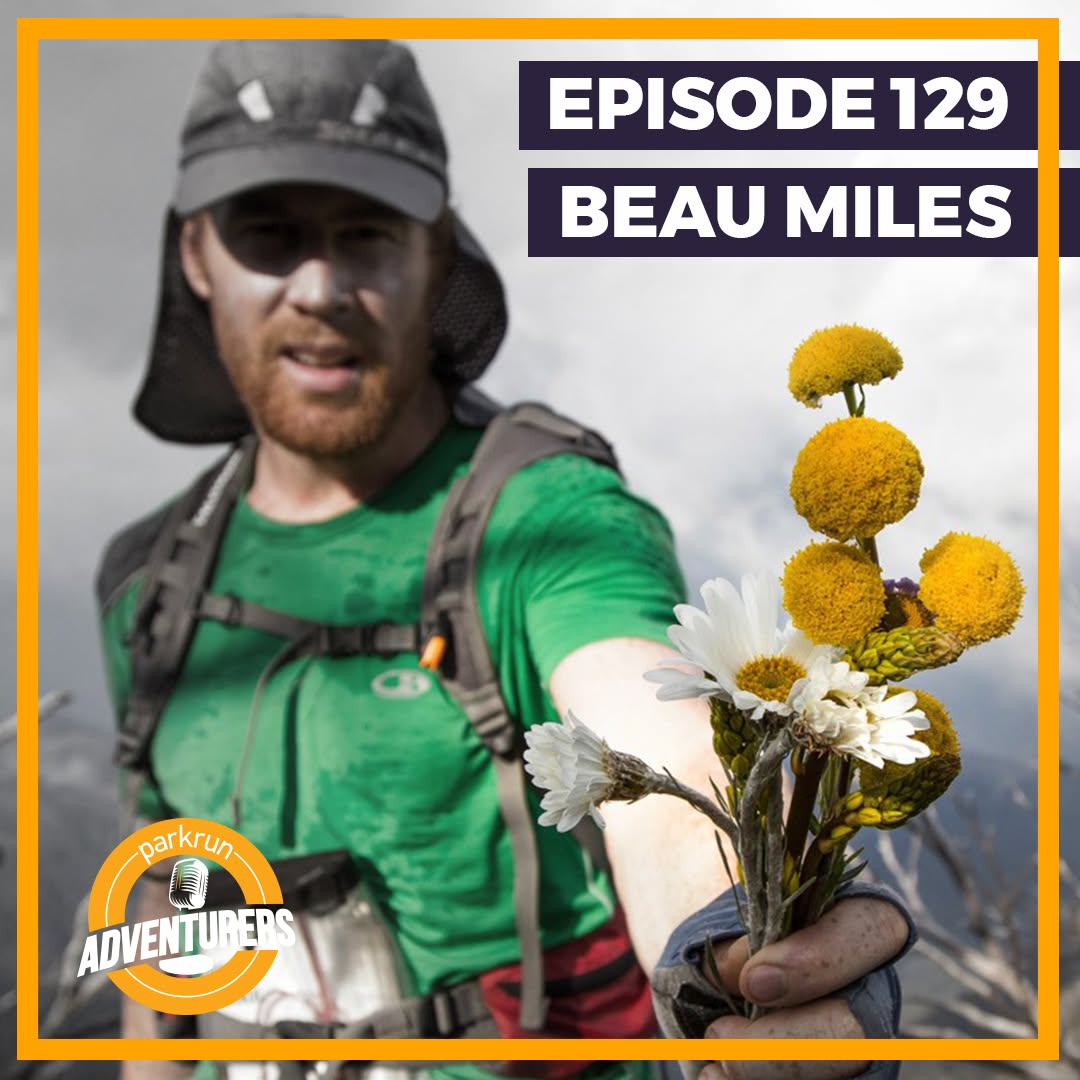
Episode 129 - Beau Miles
Episode details · · 177 speaker turns · sound cues from context
Enhanced transcript
Speaker names appear where they could be established with confidence. Others are shown as “Unidentified speaker”. Sounds that are not speech — music, laughter, people talking over each other — are written in [square brackets].
Episode 129 - Beau Miles · 2018-09-14
Enhanced transcript — Produced by an automated editing pass — speakers named, sound described, segments marked. NOT yet checked by a person.
Speaker names appear only where they could be established with confidence; others are shown as “Unidentified speaker”. Non-speech sound is in [square brackets].
Source: https://log.5kadventures.net/transcripts/ep129.html · The Adventurers Log · An independent project, not affiliated with or endorsed by parkrun.
Welcome
Scott Trickett: Just when you thought two parkrun podcasts couldn't be enough, three parkrun podcasts couldn't be enough, maybe there's four coming, Mel, but this is the best. I'm going on record as saying, in the new generation, it was the first, and so it still remains the best. Welcome to the parkrun adventurers, the number one parkrun podcast in Australia. Are you welcoming me or are you welcoming the guests? No, I'm welcoming the listeners and everybody who's tuned in for the first time and for the 128th time. This is episode 129. My co-host is Mel Erbacher, who you've already heard, but welcome, Mel.
Melissa Erbacher: Thanks, Scotty. Happy to be here, as always.
Scott Trickett: parkrun's blowing up all over the podcast airwaves.
Melissa Erbacher: So there's a new kid on the block.
Scott Trickett: There is. I discovered a new podcast. We'll get to that at the end of this week's episode. Let's not give them too much air time.
Melissa Erbacher: They might end up... More popular than us.
Scott Trickett: Yeah. Yep. But what a weekend you and I have just had. Last week we alluded to that we were off to the annual parkrun Australia, parkrun Australasia conference. Yep. And we did. We had a great weekend together. Mixed with a bit of fun and excitement was some weather, some interesting weather out on the harbour.
Melissa Erbacher: Yes. The weather was interesting.
Scott Trickett: Well, it makes the weekend memorable, if nothing else. For those that don't know what we're talking about, on Friday night there was sort of like an electrical storm. In Sydney it was very dramatic. It wasn't that, full-on but there was very dark skies and there was lots of lightning around and that was the exact moment that we were on a boat in the middle of the harbour on our way to a tiny island to camp in tents that you know I'm not a camping expert now but apparently they are conductors of electricity
Melissa Erbacher: Tenser?
Scott Trickett: Yes, because I think all the metal of the poles and everything.
Melissa Erbacher: And because all the canvas was wet.
Scott Trickett: Yeah. Well, see, I didn't really consider that.
Melissa Erbacher: I was more thinking how exposed we were. And the fact that the plan B was to herd us all into a tunnel under the cliffs, however, we would have had to be exposed to the elements for a good 100, 200 metres before we made it to the entrance of the tunnel. Yeah.
Scott Trickett: How much fun would that have been to be huddled in a tunnel in the middle of the night as the rain poured down?
Melissa Erbacher: I don't know if I could put a measurement on how much fun that would be, Scotty.
Scott Trickett: But despite all that, it was still fun. We had a great time getting together with all our ambassadors and our visitors from overseas. We had guests from South Africa, our South African mates were with us. Our New Zealand country managers joined us and we had visitors from Malaysia as well.
Melissa Erbacher: And the UK.
Scott Trickett: And the UK. Oh, that mob too. They came a long way to see us.
Melissa Erbacher: It was very interesting. People from far and far.
Scott Trickett: And what do we do, Mel? What do we do all weekend?
Melissa Erbacher: Well, we headed to Greenway parkrun on Saturday morning. There was a showdown.
Scott Trickett: Was it really a showdown? It ended pretty quickly.
Melissa Erbacher: It was really a showdown. I would like to hear what you think. Do you think you won that showdown?
Scott Trickett: Absolutely.
Melissa Erbacher: Okay. Based on what grounds? I crossed the finish line first. See, this is where I think possibly we had a different understanding because I'm fairly confident I won because I got the most number of high fives. Did we talk about it being a speed thing?
Scott Trickett: That's a pretty ambiguous claim to victory to say that you won because you got more high fives because you actually don't know how many high fives I got.
Melissa Erbacher: Oh, I was watching. You weren't even high fiving. In fact, you might have got two because I'm pretty sure I gave you two high fives.
Scott Trickett: Actually, it wasn't a big high-five morning. I'll admit that. No, I'll take that back. I was high-fiving. I high-fived a bit. What am I talking about?
Melissa Erbacher: Okay. Because I found it to be a really sociable course. It's a double out and back. Well, it's a double loop. Yeah. It's a double loopy out and back.
Scott Trickett: Yeah. Lots of opportunities. Yeah.
Melissa Erbacher: Heaps of opportunities to see the faster people and the slower people and high fives all around. I had a very high-fived hand by the end of the event. It was good fun.
Scott Trickett: Yeah, it was good fun. So we injected 70-odd ambassadors into the event. Greta was there and she gives us a roving report that we'll go to pretty shortly. to give you a sense of what it was like. But yeah, so we injected 70 people. And we knew these 70 people, Mel. So it was awesome. So every sort of second person you passed, you knew. So you get to say hello to. And those of you who didn't, you said hello to anyway. And they were going, who's that?
Melissa Erbacher: Yeah, it was great. It was just like being at a home parkrun because when I'm one of those noisy people who always, you know, cheers everybody on and I call them by name if I know their names. So there were lots of names called out and there must have been a lot of the locals who are thinking, who the hell is that and how did they know all these people?
Scott Trickett: It was good.
Melissa Erbacher: Fun morning.
Scott Trickett: I ran okay. So this time last year, my parkrun PB was obtained at the conference last year at Varsity Lakes quite by accident when I had two pacers trying to pace me who gave up on me. And unfortunately, one of those people, I got sucked in again on Saturday. I said, come on, come on, let's catch so-and-so up the road. And it made me run a bit quicker.
Melissa Erbacher: Was it a PB for you this weekend?
Scott Trickett: No, no, no, definitely not. Definitely not. It was a PB in my current state. My current state with my new friend called my belly. I had my belly along with me.
Melissa Erbacher: It was a belly PB.
Scott Trickett: It was a belly PB, yep.
Melissa Erbacher: Well done you, Scotty.
Scott Trickett: But should we go to keep the Greenway theme? Should we have a listen to Greta? She caught up with the Event Directors.
Roving reports & the Channel 5 News crew
Roving report Greta — Greenway parkrun
Greta: Hello, parkrun adventurers. I'm here at Greenway parkrun today and we're here with the Event Directors. Mel and Rachel. And we've had a great morning this morning, haven't we? Apart from the weather, but yeah.
Unidentified speaker: We're meant to be in spring, but it's a little bit wet, but it's been a fantastic event and we've loved having you all here.
Greta: So we're having a parkrun conference this weekend and we've come visiting, so we've sort of increased your numbers a little bit this morning. How many would you normally get? Yeah, we normally get about 160 runners.
Unidentified speaker: On our launch we had three runners. So we had to go into beyond the 300 tokens that we were issued with. That was an exciting experience. thing to happen on our launch. And how long have you been running now? We started in February, so we are on event number 32.
Greta: And how long have you guys been parkrunning? What's your parkrun story?
Unidentified speaker: I've been parkrunning for about three or four, maybe five years. So I started There weren't so many in Sydney originally and they were a bit hard to get to, so we used to go when we were down in Canberra. Then we used to go over to Mosman, which I liked because it was nice and early. They have a 7am start. Yes, they do. And then Cooks River, when that one launched, it became fairly regular at Cooks River.
Greta: And what inspired you to start?
Unidentified speaker: Sorry, what's your parkrun story? So I'm originally from the UK, so I've been with parkrun for over 10 years. And so, yeah, I had one very locally in my local town of Eastleigh, which I used to go to and yeah I moved here nine years ago now so yeah. And you've been parkrunning here before starting Greenway? I did a few but yeah I've been volunteering more than I've been running because Saturday is actually my day off of running because I'm a running coach so yeah I've been volunteering more than running. Well good on you. Yeah and that's what this is all about and putting this event into the community and getting more people moving. So what was it that inspired both of you to start Greenway? We just wanted to give back to our local community and give them something closer to home that they could walk to rather than having to get in the car every Saturday and driving. As you know, there are many now in Sydney, but this was just another opportunity to get one in the local area. There's a bit of a gap. Yeah, absolutely. Time for a new parkrun.
Unidentified speaker: Yeah, and for me it's more about the mums who will walk it with their kids rather than the... very fast runners although I love seeing them obviously and we're actually getting quite well known now because we've got a fast course it is quite fast yeah yeah but I was fast everyone's fast that's it yeah do you get lots of families out yeah we get families and kids doing like their Duke of ed service hours and stuff like that yeah so that's what I think oh time to go home
Greta: And you had some great helpers today. She was helping with the tokens.
Unidentified speaker: Yeah, that's right. And the two parents are Run Directors as well. Oh, lovely.
Greta: So they're a regular parkrun family. Yeah.
Unidentified speaker: We've been very lucky here, actually. In the six months that we've been going, we've, I think, gained 10 Run Directors. Wonderful. We've got a couple of couples that do it with us as well. So we've got a great community that's come out and decided to help us with this as well, which is fantastic.
Greta: Well, well done. Thank you for all you do for parkrun and well done for building such a wonderful community here at Greenway. And thank you so much for having us all here this morning. We've had such a great morning. It's been a pleasure.
Melissa Erbacher: Thank you. Thanks. As always, thanks to Greta for stepping up and being a member of the Channel 5 News crew. It's great to have you guys out there and having the conversations. I actually took a selfie with Greta interviewing the guys in the background. And I know we've said this before, Scotty, but you and I, we always forget, you know, to do anything sort of too much podcast related on a Saturday morning. We don't have or don't make the time ourselves to remember and go and get audio and things like that. So it's awesome to have the crew around doing that for us, part of the team they're very valued but conference weekend you know big weekend we were away it's kicked off on the Friday and because it did you were in New South Wales rather than being in Victoria so you missed out on the Melbourne screening of the RunNation Film Festival I know I'm absolutely gutted because I love it I love the RunNation Film Festival and I love what Buzz does
Scott Trickett: And I don't love that he scheduled it on this weekend, so I missed it.
Melissa Erbacher: Well, next year we'll have to just be a little bit more careful with the weekend conferences scheduled perhaps. However, you know, there's still going to be opportunities for people. There's still more screenings coming and the parkrun editions as well, the local parkrun editions. You might be able to catch one of those still.
Scott Trickett: Yep, I can. So the parkrun edition is like a best of, the best of the last three years. And our guest today, his short film features in the 2018 edition of the festival, and I'm keen to learn more. So let's cross enough of our jibber-jabbering. Let's crack on with the interview.
Interview Beau Miles — Writer, filmmaker and adventurer; academic at Monash University
Melissa Erbacher: Very excited to welcome our next guest. For those of you who've been out there watching some running films at the RunNation Film Festival recently, you would definitely recognise the voice of Beau Miles, who is a writer and filmmaker, also an academic at Monash University. And he's joining us now after we saw his film at the film festival. We wanted to know more. Beau, welcome to the parkrun adventurers podcast.
Beau Miles: You know, Mel and hi, Scotty.
Melissa Erbacher: Thanks so much for joining us, Bo. I mentioned this to you before when we were just chatting about getting you on the podcast that I thought your film was the best one out of the whole bunch of the festival. You attended one of the screenings yourself. How was that? How did it feel sort of watching yourself on the screen and seeing the audience's live reactions?
Beau Miles: Yeah, it's a good question, Mel. I went to the Sydney, the first showing, and then I went to Melbourne last week, which were two very different feeling crowds. And I really do go along now to see the crowd's reaction and not watch myself. I kind of get over myself by the time it hits Melbourne. any screen of any kind. And so particularly, and maybe because I'm a Melbourne boy, it was really warm and a massive, the screen was huge too. I've never seen myself in such, it was kind of godly, you know, at the Astor Theatre, it was a mega screen. And so the crowds were very different and I reacted very differently too. So I talked at both of the events and the Sydney one, I was a real goose, I reckon, in the Sydney one. I wasn't, I wasn't quite ready to answer questions yet. I was still in kind of audience mode and I was a bit in my shell and I was even nervous and I'm never nervous when I'm talking about myself because all you're doing is talking about yourself, you know. But in any case, it was the events were really, they were both very warm really and the crowd was lovely and I talked to a whole bunch of people before and after and they're fun events. They're really, they're great.
Scott Trickett: Beau, for those who haven't been to the RunNation Film Festival yet, can you explain your movie that appears at the festival? What's the idea behind your little short film?
Beau Miles: So I did a PhD a year or so ago, and it's been in the works for years, so it took me six years to write. And so I'd go underground every now and again and do these big writing spells, and I look out the window and all I want to do is go running or plant a tree or just be anywhere but sitting at a desk writing in a sense. And as much as I enjoy writing, I enjoy being outside and doing things a lot more. And so what I did once was I ran around my block, which I found out after running around it that it's a perfect mile. It just felt like this sort of mile-long thing. So I jumped in my old ute and drove around my block and it was a mile long. And I thought, you know, that's such an iconic thing distance the mile you know and so in between writing bouts and when I'd get a bit foggy headed or you know in a sort of a writer's funk or a researcher's funk I'd go for just to do a mile between between these writing bits and just enough to get a sweat up you know and over time I thought gee wouldn't it be cool if I did if I did that enough you know you could sort of chalk up a marathon or a real a whole bunch of distance in between doing my writing project and so The film was called A Mile an Hour and it's a culmination of doing a whole bunch of things in between running a mile an hour for one full day. And so that was the idea and that was the sort of the kernel or the seed, I suppose you'd say, that that's where the idea came from. And now it's a 17-minute film of running a mile an hour and in between doing a whole bunch of things. I didn't write, not much anyway. I did mostly sort of practical things in my shed. Yeah, that's a long-winded elevator pitch for the film.
Melissa Erbacher: So basically what you're saying is it was born out of procrastination.
Beau Miles: Yeah, it was kind of strategic procrastination because I'm not a good procrastinator. And I suppose the art of procrastination is to do something with an outcome that's opposite to what you're actually supposed to be doing. So in a sense I wanted to blend it together. I'm going to run a mile an hour around my block and in between I'm going to do all of these tasks together that aren't running or a PhD, as it were. So, yeah, and I really like tinkering in the shed too. So I thought how much can you actually do in a day and you just use a marathon as a structure and away you go. I had all these nice sort of synergies that the blocks are mile long, that you could do one an hour and then for the other 50 minutes try and do as much in the shed as possible, you know.
Melissa Erbacher: And of course, you had 24 hours to do it. And you did, as you mentioned, a whole bunch of things, random things like fixing chairs. You built an outdoor table. You made a paddle. You played some Scrabble. You planted trees. You painted a fence. You mowed in the middle of the night. That one was a bit... Was that a bit sketchy? Did you wake up the next day? Well, not wake up because you didn't really sleep, but did you check out the lawn and go, oh, I did a rough job of that?
Beau Miles: Yeah, I did a really crap job because I've never actually used my lawnmower at night and it's got headlights, but they didn't work. So I used my running head torch, which... it doesn't translate as well as what headlights on a car or whatever does, you know. So I certainly missed some bits. And, look, it takes me two hours to do my lawn, so I was never going to be able to do the whole lot anyway. So I wake up the next morning and there's just a patch, you know, and that patch certainly had some long sections that weren't mowed. So, yeah, a bit of a dart at the old mowing thing. And the interesting sort of back story of that is that, in the sense of the film. It's quite a funny little quirky bit of the film, I think, when, you know, you're sort of tinkering along doing jobs and then all of a sudden a lawnmower comes into the scene. Our producer, Mitch Drummond, we sent this off to our new sound editor and he didn't quite get that that was supposed to be funny. You know, this sort of you've got this nice, lovely scene and all of a sudden it's broken with this lawnmower coming into it and he'd smoothed it out so that you could hear the lawnmower the whole time and it was... You know, that was a really interesting part of filmmaking that a new member of our team didn't quite get that that was supposed to be a quirky, funny bit rather than just doing the lawns, you know what I mean? So there's lots that gets lost in translation with filmmaking. So the storytelling was just as hard as the doing itself, you know.
Scott Trickett: One of the challenges you had on this 24-hour adventure was staying awake and you had a couple of little naps there. I'm curious, the filmmaker that was with you, the cameraman, did he manage to stay awake for the whole 24 hours as well or did you tag team it? How did you make sure you didn't both sleep through an alarm or something?
Beau Miles: Yeah. Well, I suppose there's a Seinfeld episode where Jerry hosts a marathon runner who famously missed the start of a marathon once and he gets Kramer and his next door neighbour of course, his bloody wacky next door neighbour too, who's got an internal alarm clock to come and wake them up the next morning and it's the one time that it fails. I think all humans have this internal alarm clock in a sense and I was certainly going to get up every hour I think. But in saying that, the hours between 1 and 5am, they're such deep hours, especially if you've been doing so much leading up to that, I really was craving sleep. And so my little alarm did actually wake me up genuinely and in a shock way every hour from 1am to 5am. I didn't have the heart to wake up Mitch, so I did all the filming from those few hours. But it wasn't much either. It was those sort of ghosting laps where I took the camera out with me and it was a full moon. And so I didn't have my head torch. My head torch had lost their batteries until... The guys woke up who had a supply of batteries I didn't want to be rooting around with in the middle of the night. So I had this real amazing time between 1 and 5 a.m. where I was truly alone and the barn was my beacon to run back to. I had no head torch on and I'd take out this camera and do these monologues to myself in the middle of the night running these country roads. And it was amazing. It was an amazing experience actually because I've never run that late at night before and not in the construct that I'd cooked up. And it really did feel it was a surreal thing being so tired and, you know, five minutes earlier I was dead asleep and lusting for more and then bing, I've got to get up and do this lap. And then, of course, it takes you another 20 or 30 minutes to try and wind down and go back to sleep because you've just jeered yourself up to do this run. So it was incredible. It was an amazing experience.
Melissa Erbacher: You mentioned in the film that you felt a bit like a ghost while you were out there in the middle of the night doing that. Obviously, sleep deprivation sort of plays on your brain and, you know, you must go into some kind of automatic robot mode. I think, to a certain extent at different points. How difficult was it to stay focused on doing some of your other little bits of tasks in the middle of the night in those hours, like just apart from the running where you're making your legs turn over?
Beau Miles: It's a good question, Mel. I think we've all got this sort of rhythm in our bodies that we can train in a sense too. And there's been a lot of people that do 24-hour marathons and four-day marathons and whatever, and they can run at any time, um, of the day. And I'm not that person. I've never really run it between 1am and 5am before. So, um, it was really, I don't believe in mind over matter so much, but I certainly believe in, um, in training the body. Uh, and you do that mindfully through just repetition and telling yourself that this is right and it should be happening. And, and then there's, of course, there's this big other layer of embodiedness that, we probably can't train very well. And I think it has a lot to do with our circadian rhythm of the sun and moon and all that stuff. And so by the time 6 a.m. came, you know, I'd already run 20 miles or thereabouts. And so three quarters of a marathon. And yet my legs were brand new again when the sun came up. It was remarkable. Because those laps between 1 and 5 a.m., they really were sluggish because my legs didn't feel like running at such the dead of the night. And yet it didn't have a lot to do with my fitness or strength. It was to do with, oh, you should be sleeping now, you idiot. You know, what are you doing? And look, I didn't do a lot between 1 and 5 a.m. anyway. I basically stoked the fire, did my lap, contemplated doing a few things, checked that the glue was drying on the paddle, and that was about it, and then I'd try and get some rest, and that was a bit flawed as well.
Scott Trickett: Well, it really is a great little short film. Filmmaking is not an easy thing to do, and you've done it really well here. You need to be a great storyteller. So do you have a little bit of a background in this, and how many of these types of short films have you created?
Beau Miles: Yeah, Scotty, I've been taking a camera with me on my trips since I was since I was well, an adult, I suppose. So I've had 20 solid years of always having a camera with me. And to be honest, the first sort of 10 years, I wasn't much good at it, or at least I took the camera with me and I was opportunistic. I would shoot what I thought was pretty or insightful or adventurous, and I wouldn't shoot all of the in-betweens. And it's only really been the last 10 years where I see so much more, uh, I suppose, worth and insight and total humanity, I suppose, because we're all flawed and we're all weird and we've all got these little quirky stories to tell. And a camera can do that now, but then you've got to also really trust yourself with how you put that together. And so, I mean, you can jump on my YouTube site and I've basically uploaded everything I've ever created on it and there'll be more. There's some old stuff I've done before that I'll put up there and It really reveals my younger self of what I thought was worthy to tell. And it's a real craft that I'm working on and I've got to sort of push myself into the corner sometimes of trying to be creative. So I'm doing this piece at the moment about making a paddle from scrap wood that I find between the train station and work. And I had 20 minutes to find scrap wood and now I've made this beautiful paddle out of it. And I wanted to finish the film on my first paddle stroke paddling down the Murray, this beautiful big wide sweeping shot, you know, and the drone didn't work. So I was there on the riverbank of the Murray last week thinking, shit, how do I finish this with such an impact? And I had to go back to being really, I suppose, creative and going back to the reasons of why I made the paddle, which was far more... You know, I had to really corner myself to be creative again and not just rely on this beautiful drone shot. I had to be creative and tell the story that you're trying to tell, Beau, and don't just rely on this one key shot, you know. And that's really important as a storyteller is to really ask yourself, what the hell am I trying to say here and what are some quirky, interesting ways to tell it? Because ultimately I think humans really like that sense of, weirdness and if it's done with, in a sense, with a story in mind.
Scott Trickett: You had 24 hours worth of footage. Were there a few stories that were left out from the final package?
Beau Miles: That's a good question too. So, When I was in contact with Buzz, the festival director, for a few weeks beforehand and saying, Buzz, look, we promised you a 12-minute film but it's looking like it's going to be 15 and then a week later it's, look, Buzz, it looks like it's going to be 17 and in reality it probably should have been 20. And so, yes, there's a few stories in there that didn't make the final cut just to keep the pace of it and to try and emphasise just how jam-packed the 24 hours was. Um, and Scotty, I've never had so much footage in my life. So I had two cameramen on that plus myself. So in many respects, you're kind of shooting. What's that? What's the maths on 24, 72 hours worth of footage. That's a bloody lot. And not that we had the camera rolling the whole time, but to make 17 minutes out of, you know, say, a full days of three, three lenses. Um, geez. And, and there's so many beautiful shots too. And you think, gee, how, how indulgent can you be with either the story or the landscape or music, um, or a really good voiceover, but the voiceover really takes you off on another tangent. So I'm learning all the time. Uh, and I don't always get it right, but, um, But sometimes you tend to get that mix right. And I think the mile an hour is probably the best 17 minutes of storytelling I've ever had because maybe it was because we had so much footage to choose from.
Melissa Erbacher: Do you think perhaps having that shorter sort of timeframe that you were trying to fit everything into to make it nice and punchy and, you know, cohesive, do you think that forced you to be creative and ruthless with the shots that you did cut out?
Beau Miles: Yeah, absolutely, Mel. It was incredible having so much footage. And I think I'm sold, you know. I was always into the feature length. I thought the feature length film sort of is your rite of passage as a filmmaker to make something with a bit longer legs. So I did that for Africa, for my African paddle and for my running film across the Australian Alps. They're on YouTube. Go to Beau Miles YouTube and check them out. But I think I'm just as proud of this new format that myself and Mitch have cooked up, which is short film format made for small screens in people's pockets. And, you know, we don't all have time to spend 40 or 50 minutes to jump into a doco. And the 10-minute formula or the 15-minute formula is so doable. That's why, you know, the TED Talk is made for 15 to 18 minutes and that's their formula and they've had a billion views, you know, or billions. So... Yeah, Bass by Kayak when I paddled to Tassie, you know, six, ten-minute episodes, that's really sharpened my toolkit as a filmmaker to, you know, have these epiphanies and lows and resolutions all within a smaller space of time. And so I really like that. I think it's great and I think it's catering for the mobile human, you know.
Melissa Erbacher: You mentioned your Paddle Around Africa film. I have actually watched that one too. You're quite the adventurer and you've been doing this for a while. How does it sit with you? And I'm sure you appreciate the irony that you lecture at the Monash University indoors about adventures that generally take place outdoors. How does that fit into your life?
Beau Miles: Mel, you've struck upon a chord that's my biggest concern Concern with life right now is the better I get or the more I think or the more leadership that I gain in outdoor education or at Monash in any capacity means the less in the field I am or at least it feels that way and it hasn't changed much for the last few years. I do about 40 or 45 days of programming in the field. But if I was a tradie and I was working five days a week on the tools, I'd be on the job site 200 or 220 days a year and I feel like that's really where my space is, you know. I did that for years as a guide and as a school teacher and as a filmmaker. I'd be outside 300 days a year and then you're only really inside on weekends. or a day a week. And so I've got to now justify to myself because natively I want to be outside more and I have to justify to Monash who pay me well to be inside to write about what I do and to teach what I do. I have to now find that happy balance. And I must admit it's my biggest conundrum right now is whether I pursue academia more because it means sitting and being inside so much or whether I really push for my position being more outside and my impact can be in filmmaking and in guiding and in making stories about being outside and not about preaching it from the indoors.
Scott Trickett: I'm going to do a really tenuous link here, Beau, but I think you'll have an opinion on it because one thing we've discovered, we're challenging our listeners at the moment to get outdoors every day and walk or run at least two kilometres. And it's one thing I've noticed since we've launched Junior parkrun that now my daughter and family are outdoors every Sunday morning. I think it's got some real power to it, to actually the act of being outdoors and being in nature. Like it's really good for our soul. It's really good for my... my mental health more than anything else. You obviously must feel pretty passionately about this as well.
Beau Miles: It's a really good question, Scotty, about mental health and just being outdoors. Scholars overcomplicate things because we're adults and that's what we do. A study reveals that humans are far better off and heal better and feel better by having a window that looks over a tree or hearing birdsong or whatever it might be. where kids know that already. They just go out and they play and they're happier and they're healthier and they get little scars because they trip over on a tree root. You know, all these sort of great things that actually engage them with the outside. They climb a tree without asking questions about it whatsoever and then adult comes along or adulthood comes along and then we ask questions as to why we like climbing trees and we call it things like ecophilia or biophilia or attention restoration theory, based on the fact that when we hear birdsong or we see green spaces or we're just simply outside, might be reading a book or having a cup of tea, we feel better than when we're inside having a cup of tea or reading a book. And so a run is exactly that as well. And I sometimes, even now, I've run five or six days a week for 20 years and I sometimes now walk at the end of my run and I've never done that before just to, to take a bit more in. You know, running, you've still got a bit of wind in your ears and you're puffing and you block out a lot of the world just because of your own human sort of sounds and movement and what stuff that you miss. And it really sort of ends my run really well and I sort of ground myself a bit more. And, yeah, so kids just do this naturally. They're remarkable and we've got to be kids more in a sense in an adult body and we'll be better off for it, I think.
Melissa Erbacher: Do you think there's a marked difference between getting out and going for a run or a walk in a city versus doing that out on a trail or more in a natural environment?
Beau Miles: It's an excellent question, Mel. And half of me wants to say no. I think the power of perception is so epic that you can soak in and you can change your thoughts and your world and what you're feeling and whatever through the sheer power of perception. But I also know too that you know, based on my last answer, that green space and the rustle of trees and, you know, water, and this is what the scholars would say again, that that taps into something that's animalistic in us and that is primal and that that's... It's far more empowering than concreted streets and the wind rustling through buildings. I'm not so sure all the time because I think as a country kid when I go into a mega city, my eyes are on springs. You know, I go to Hong Kong and I think, holy shit, you know, everything smells different. It looks different. It is so I'm immersively bombarded, you know, and so it's very intriguing to me. But I don't know, if I did that every day, I wonder if that would just completely wear off, whereas me going to the forest every day, I'm still engaged every time. And maybe that's the difference. And I know that, and you folks would know too, that you probably get more resonance with a lot of your runs that are in maybe more natural places or take in really different environments rather than just one type.
Melissa Erbacher: You strike me, Beau, as the kind of person who has a very good... Handle on, you know, being able to get that inner child to come out and not squash all that like childlike wonder that we used to have and gets destroyed with adulthood. Do you have any recommendations for how people can, you know, take themselves back to that?
Beau Miles: So how do I, how do I, I don't know. I'm a pretty serious fella underneath it all and yet really blinded stupid and really childish in many other respects and I I slip between the two kind of versions of myself really quite I do it all the time you know I do it in class where I'm really trying to hammer in an idea that's deep philosophy and then all of a sudden you know I just think oh this is a little bit much let's just go for a walk outside and kick a ball around you know um So I don't know, the whole childlike thing, look, I'm really clucky at the moment. So Helen and I try and have a baby, which is awfully hard when you're a field guide and you're in the field all the time. It just doesn't quite, you know, it doesn't line up with life really, which is tricky. But my point to that is that I really want to start to be a child again through my own child because I Maybe I'm getting too old just to be childish my whole life as well, so I need another excuse. So having a little one around might bring out even some more childlike qualities in me. I don't know. And in terms of an adult being more childlike, it's hard because you're having to resist everything that we're so culturally formed that we become adults, and that means we often become boring and ignore all the stuff that kids don't.
Scott Trickett: Beau, what's next? What's your next project?
Beau Miles: So the next project, you know what it is. The next project for me is consolidating and finishing a lot of projects that have already come and gone and that are current. You know, there's four or five films on the cutting room floor that we're chopping up at the moment that don't really need any more footage other than just putting in the right order and some voiceovers and some nice music or whatever. So to finish all of that stuff, I'm a bit overwhelmed actually being postdoc just with how much creative space my mind can run off and indulge in. And I'm really relishing that. It's fantastic. Although I'm just, I'm probably running at a little bit too fast a pace and trying to cook up too many ideas and action too many things. So my next stage is to finish a lot of the things that are in train, such as the commute project of walking and paddling and horse riding to work and spending some time in my big gum trees that are endangered and just hanging out up there and seeing what it's like to live in the top of a tree you know so there's a heap of projects cooking up and I've got to write too I think I've got a bit of a book deal on the go and I need to start to get my chapters in order for that so I suppose you'd say writing, filmmaking and at the same time sort of playing this game of being an academic and seeing what I can do with it If you could
Melissa Erbacher: Let's just go back very quickly to a mile an hour. And if you could sum up the one thing that you learnt from that that you will take with you, Beau, what would it be?
Beau Miles: The potentials of one day are incredible. I think so many people forget just how powerful 24 hours, which is 86,400 seconds, I think. It is immense what a human can – they can shift their whole worldview in a day, let alone make a table and make a canoe paddle and run a marathon and, you know, make your best friend's three square meals from scratch and do these wonderful things. And, you know, that was a really revelation and I knew it anyway, right? I'm a doer and I think a lot of people are doers and realise how much we can do. But I suppose that the Little Film Project just emphasised it and I've never told a story like that before.
Scott Trickett: Well, well done, Beau. We love doers at the parkrun adventurers. We urge everybody who hasn't been to the RunNation Film Festival to go this year, but look you up on YouTube, Beau Miles YouTube, and you'll be able to see the short film there. And thanks for spending a few minutes talking to us this afternoon.
Beau Miles: Thank you, Scotty, and thank you, Mel. You're doing great stuff. Good on you. I'm going to join you for the next parkrun somewhere down the path, so good on you.
Roving reports & the Channel 5 News crew
Roving report Melissa Ellis — Toolern Creek parkrun
Melissa Ellis: Good morning parkrun adventurers, it's Melissa here from the Channel 5 News crew reporting in from Toolern Creek parkrun. We've got beautiful blue skies here this morning, the weather's lovely. Toolern Creek is an out and back course, relatively flat, and I'm currently walking the course with the Tail Walker. Hello?
Matt: Hello, how are you? My name's Matt.
Melissa Ellis: Hi, Matt.
Matt: How are we today?
Melissa Ellis: Very good. So, thank you for volunteering.
Matt: No, you're right.
Melissa Ellis: And what's your parkrun story?
Matt: I'm relatively new to it. Still only done under 10 parkruns, but this is my second or third volunteer as well, so I try and keep it even. And, yeah, I'm a parkwalker, not a runner, but just here for a bit of exercise.
Melissa Ellis: That's okay, because parkrun's inclusive and we love...
Matt: to do it whichever way we can walking or running or pushing a pram or wheelchairs that's it so I've seen you in the social media a bit yep yeah so you're on a bit of a journey yeah that's it just here to get fit try and lose a bit of weight and that's it just be a better person so parkrun's good family everyone's encourages you and all that stuff so it's good to get down here made a few friends since you've been parkrunning yeah definitely definitely the the regulars down at Toolern Creek a good bunch and stuff like that and then as you said on social media you get encouragement from everywhere that's great do you live close by yeah I live in Melton so it's just a five minute drive down here each each Saturday morning so and have you done any other parkruns only North Lakes in Brisbane okay so that's the only other one we've done so far so We have spoken about trying to get to a few other ones, but it just hasn't worked out just yet.
Melissa Ellis: Oh, that's all right. And what about any of the challenges? You're probably still working on your 50 milestone, but have you heard about the other parkrun clubs that you can do?
Matt: No, I haven't really.
Melissa Ellis: Alphabeteers? When you try and get all the letters of the alphabet?
Matt: Oh, yeah. My parents are doing all that stuff. They've got all these spreadsheets and stuff like that, so... they're encouraging me to tag along with them and do all that type of stuff. But with work, it's not always easy.
Melissa Ellis: It's completely normal to have spreadsheets. What are you talking about? Doesn't everybody?
Matt: Good work, guys. Well done.
Melissa Erbacher: Okay, well, thanks for talking to me today.
Matt: No worries.
Melissa Erbacher: We had our roving reporter, Greta, at Greenway earlier on in the episode, but we also got a roving report from our friend, Melissa Ellis, who was at Toulon Creek or Toulon Creek. And I'm going to get it wrong every single time I attempt it. But there you have it. You've got two versions. You can choose which way you'd like to pronounce it, tomato or tomato.
Launches and anniversaries"Where is the cake?"
Scott Trickett: No launches again this week, Mel. We're in a barren period of new events. But luckily, we still have had launches in previous years. So we have anniversaries to celebrate. And they are Broadbeach Waters in Queensland.
Melissa Erbacher: Nuriootpa in South Australia.
Scott Trickett: Pakenham in Victoria.
Melissa Erbacher: Palmerston in the Northern Territory.
Scott Trickett: And Redcliffe in Queensland.
Melissa Erbacher: So happy anniversary, guys.
Hotline
Melissa Erbacher: Now, is it time to go to our hotline, Scotty?
Scott Trickett: This was a great idea to include it in the bingo because we've been flooded, inundated with hotline questions. So we're going to save them up, much like we did with the Poem Zone. But let's get to this week's batch. Hotline.
[music]
Barney: Hello, Scott and Mel. It's Barney here. I have a question for the hotline. I would like to know, during streaky September, which is harder to give up, lollies or caffeine?
Melissa Erbacher: Excellent question, Barney. Excellent question. I would say lollies. Definitely lollies are more difficult to give up. I haven't actually really had caffeine for several years now, so not difficult for me to give that one away at all. How about you, Scotty?
Scott Trickett: Well, I think the answer is caffeine because I couldn't give it up, whereas you're still on your mission to... Give up sugar and chocolate.
Melissa Erbacher: Well, that's not entirely accurate. Crazy talk. You did give caffeine up for one day.
Scott Trickett: For one day. This is true. So I couldn't last beyond one day. Whereas as we sit here now on Friday morning, the 14th, you're still going strong. So you're 14 times better at this than me. Or it's just harder to give up caffeine. That's the question Barney's asking. Yeah. But we can't really answer it. Maybe only I can answer it because you don't drink coffee. So the question is, could I give up Skittles? I haven't had Skittles this month. So I might have had chocolate.
Melissa Erbacher: We do have some other adventurers who have also committed to not having Skittles this month. However, they don't also usually eat Skittles.
Scott Trickett: Well, I do. I eat Skittles, but maybe not on a daily basis that you were in that situation, pattern of behaviour I was in the skittle zone yeah you're in the skittle zone I'd like to definitively answer all our hotline questions but we can't Barney maybe we should do a poll maybe we should do a poll this week and we'll get the adventurers to answer a poll pinching ideas from other podcasts now Mel no we've had a poll before and it was your idea the last time yeah I'm open to polls. Let's do a poll. A poll on the Facebook page tonight. Answering, definitively answering, definitively answering Barney's question because we can't. Should we go to the next one?
Melissa Erbacher: Yes.
Brendo / Brendan: Hi, Scotty and Mel. This is Brendo here from Shellharbour parkrun, just about to start out on my September the 6th streaky September run and trying to create some Strava art. But it made me think, Scotty, hashtag, what the font? Cheers.
Melissa Erbacher: That's a bit of a tricky one from Brendon. You know, the layperson might not see how that could be an actual question.
Scott Trickett: Yes. But I love hearing from Brendan. We love Brendan. We haven't heard from him since we did the listener meetup at Shellharbour. But in answer to your question, Brendan, it is the BC Falster Grotesque Bold is the definitive answer to Brendan's question.
Melissa Erbacher: That is a very – that's an interesting name for a font. Have you ever created a font, Scotty?
Scott Trickett: No, I haven't. I actually started to at one point, but it's really hard, Mel. It's really hard.
Melissa Erbacher: Yeah, I bet it is. What would you call it if you did ever make one?
Scott Trickett: I never got to the naming stage because I think I only got about three or four letters in because I had a really cool idea for about three letters, but then there's 26 letters and then there's also symbols and all this other stuff and I lost interest.
Melissa Erbacher: It's not as easy as italic where you just put everything on a lean. See, that's the difference between you and me. I always come up with the names first. So, for example, I have a novel that's been in the works for 10 years on and off and I have the names of all my characters. But do you think I have the full plot line? No.
Scott Trickett: No.
Melissa Erbacher: But I get invested in names.
Scott Trickett: What's the name of the book? Novel, sorry.
Melissa Erbacher: Oh, no, I don't have a name for the novel. Well, I've got a working title, but I'm not going to tell you what it is because that's embarrassing.
Scott Trickett: Okay.
Melissa Erbacher: Lead character's name? I had named him after one of my brothers, but I've since decided to change that. So my lead character hasn't actually got a name at present, but it's a boy.
Scott Trickett: So you're not going to give me the name of the title. You're not going to give me the name of the lead character, but you've got all these names.
Melissa Erbacher: Well, I can give you the name of the second lead character, and her name is Mari, which is short for Amarina.
Scott Trickett: Of course it is. Amarina.
Melissa Erbacher: It's an Aboriginal word or name.
Scott Trickett: I didn't know. You're teaching me things every day. And I'm teaching the listeners. Well, you're welcome, Scotty. I'm teaching Brendan what font I used to create something. Basically, how many people do you reckon know what we're talking about now? Maybe five?
Melissa Erbacher: Oh, I think that's been – what's the word? Ambitious. Oh, no, we've gone back to where I can't remember words. Yeah, ambitious or – The opposite of conservative. Generous.
Scott Trickett: Generous.
Melissa Erbacher: I think that's being generous. Five is a lot.
Scott Trickett: But this is what we do. The hotline is a service to our listeners, and Brendan wanted to know the name of that font, and we delivered.
Melissa Erbacher: Thank you very much, Brendan, for getting involved in Streaky September and for sending in your hotline question, and also thanks to Barney. Send them in, people. Keep them coming. Get that streaky bingo going.
Streaky September
Scott Trickett: As we mentioned last week, Streaky September is going off this year. I'm really happy. I get filled with joy when I open Facebook this month, Mel, because the group is really active. Everyone's posting there every day, and I love seeing it. I love seeing that people are coming along for the journey. I'm still on track. I had hopes this year that it would reignite my interest in running, because if you remember last year, I was injured. I had the sore ribs.
Melissa Erbacher: You did. But don't you have sore ribs again this year?
Scott Trickett: I do. Yeah, I do. I've got sore ribs. And I got a cuddle from my wife the other night and it hurt. My yearly cuddle from my wife and bang, it hurt. So yeah, my ribs are still tender, but I can still run and I hope to run a bit more. But again, I'm really enjoying the walks. I went out for a walk with just my wife last night.
Melissa Erbacher: So has Kasia broken her streak then?
Scott Trickett: No, she hasn't. No, Kasia's great, kid. She's a real trooper. So she's got her school performance on at the moment. So what she does is she goes down to the school oval and does laps by herself while her friends are playing so she can stay on the streak.
Melissa Erbacher: That's amazing.
Scott Trickett: Isn't she great?
Melissa Erbacher: What a good job.
Scott Trickett: When I left last week, she had her grandparents looking after her. Bonnie was away at a conference. We abandoned our only child, but she still did her streak all by herself on the oval, and she did that yesterday as well, and she'll probably do it again today.
Melissa Erbacher: That's awesome. She's got a lot more dedication than Wes, who broke his streak the second I was out of the state.
Scott Trickett: Yeah, but he's walking at the moment, so I think you're taking it easy on him by pushing him in the pram.
Unidentified speaker: Yeah.
Scott Trickett: The kid can walk now. Make him walk.
Melissa Erbacher: Well, he did one of them in the carrier. But I wouldn't say it's easy on him necessarily. He probably does a kilometre around the house during the day with the walking at the moment. However, two kilometres, I'm not being easy on him. I'm being easy on me because I have been trying to make my streaks go for a minimum 30 minutes as well. which is why they tend to be a little bit longer than two kilometres at the moment. But to walk with a toddler who has only been walking for a couple of weeks and can't necessarily do it in a straight line intentionally all the time, that would be very time-consuming for me.
Scott Trickett: Okay, I'll cut him a bit of slack. But next year, I want to see him.
Melissa Erbacher: Oh, it's all on next year.
Scott Trickett: Yep.
Melissa Erbacher: But speaking of streaky September, I just want to quickly thank all those people who got in touch to confirm that they do indeed run and or walk with Strava on their phones. They don't have GPS watches, Scotty.
Scott Trickett: Let's not get carried away with all those people, Mel. There was a couple.
Melissa Erbacher: There were at least three. Yes. And that's just the ones who are up to date. You know, just wait till all those other people who are a little bit behind hear the episode. They'll be like, ah, damn it. I should have supported Mel and told Scotty what was what.
Sign-off
Scott Trickett: I mentioned earlier in the podcast that there is another podcast I discovered during the week. It's called Stay Frosty parkrun. I've had a quick listen to episode one and let's see where this goes. But let's give it some love. Stay Frosty parkrun. Love the name.
Melissa Erbacher: Yeah, somewhat akin to Stay Classy San Diego from our own much-loved Anchorman.
Scott Trickett: We hope that's what it's about. It is. It's from the UK. It's... It's a solo one-woman podcast, but now we've got four to choose from. It's great. And on that note, I was going to talk about the Double Barrel Club, Mel, but we're running out of time this week, so I'm going to save that. I'm going to put that on the run sheet for next week. But have a think about what the Double Barrel Club might be.
[music]
[the recording continues here — the words are not reproduced]