
 — open the full-size cover
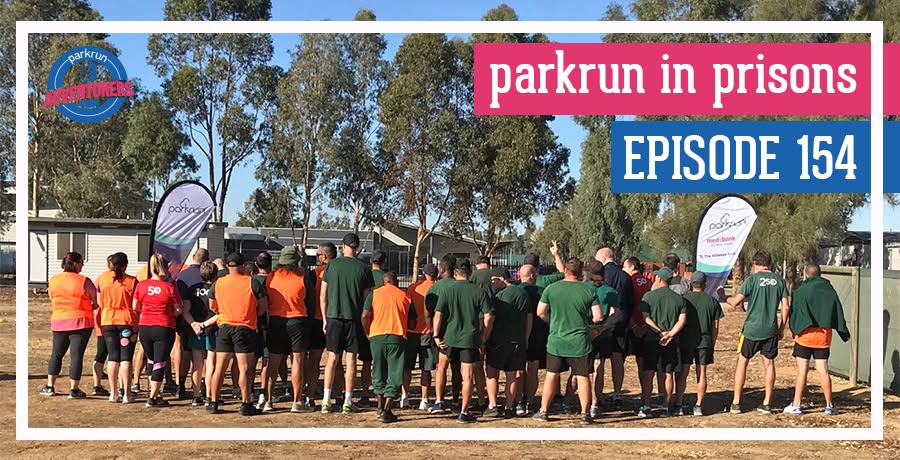
Episode 154 - parkrun in prisons
Episode details · · 110 speaker turns · sound cues from context
Enhanced transcript
Speaker names appear where they could be established with confidence. Others are shown as “Unidentified speaker”. Sounds that are not speech — music, laughter, people talking over each other — are written in [square brackets].
Episode 154 - parkrun in prisons · 2019-04-24
Enhanced transcript — Produced by an automated editing pass — speakers named, sound described, segments marked. NOT yet checked by a person.
Speaker names appear only where they could be established with confidence; others are shown as “Unidentified speaker”. Non-speech sound is in [square brackets].
Source: https://log.5kadventures.net/transcripts/ep154.html · The Adventurers Log · An independent project, not affiliated with or endorsed by parkrun.
Welcome
Melissa Erbacher: We're on the tail end of a long weekend, Scotty. It was four days of four consecutive naps for me. I was back at work today. And I can tell you I suffered by not having a nap in the middle of the day. Obviously, four days is long enough to get used to it. So I'm proclaiming episode 154 as dedicated to napping. Okay. And also chocolate because I'm not an Easter person, right? We don't celebrate Easter in my household. However, what we do do every year religiously is go to the shops the day after Easter and stock up, on 50% off bunnies and Easter eggs because, damn, that's good chocolate.
Scott Trickett: Well, it depends on which chocolate you go for, but I like you keeping on theme, Mel. But can you just stay awake for the remainder of this episode? I know you haven't had a nap today, but let's make episode 154 a nap-free zone. And I've got to be honest with you, I've had enough chocolate. Can we make it a chocolate-free zone as well?
Melissa Erbacher: You've had enough chocolate.
Scott Trickett: Yeah, most people do it the other way around. They buy the chocolate so they can indulge at Easter, not after it's all over. Okay. Yours actually makes perfect sense because I have no idea why we have so much chocolate at Easter. I'm not religious. Every year I try and bait the Christians for them to explain Easter to me because I still don't understand it.
Melissa Erbacher: Where in the Bible does it say anything about eggs or bunnies? Yeah.
Scott Trickett: I don't understand the whole four days of Easter, what it all stands for, Good Friday to Easter Sunday. And I'm blissfully ignorant, so I'm happy with that. But I definitely partake in an Easter egg or two.
Melissa Erbacher: Okay, and from what I understand, also, I'm assuming it was a bunny outfit. I've seen some fairly incriminating evidence of you dressed as some sort of furry animal on Sunday at Junior parkrun.
Scott Trickett: I don't know what you're talking about. I was a Marshal. I went along to Westerfolds Junior. Another great morning. Numbers were down a little bit. I think a few of the kids or the parents were partaking in some Easter Sunday celebrations. Do we celebrate? I think we celebrate.
Melissa Erbacher: Yeah. Easter Sunday. Well, I don't know. Maybe the numbers were down because somebody got a preview of what the Marshals were going to look like on course and didn't think it was going to be safe for children.
Scott Trickett: No, still no idea what you're talking about now.
Melissa Erbacher: Okay. Well, if any of our listeners would like to know what I'm talking about, head on over to Westerfolds Junior parkrun page. Oh, do we even post photos? We don't post photos for Junior. Hmm. I might just have to share the picture that was shared with me then.
Scott Trickett: Carry on. Let's not focus on Sunday. Let's focus on Saturday parkrun. I had a different sort of Saturday at parkrun. I attended our first prison-based event. And Mel, we previewed last week that Glen Turner was going to join us. And I think this week we're going to break with tradition a little bit. And let's just jump straight into the interview because it was a big day on Saturday.
Melissa Erbacher: All right, let's do it.
Interview Glen Turner — Health & Wellbeing Lead, parkrun Australia and NZ (formerly comms manager for parkrun UK)
Scott Trickett: Joining us for the third time on the parkrun adventurers podcast, we had him back at the end of 2017. He joined us at the start of this year and he's back and we were talking prisons this week. Both Glen and I attended the prison launch on the weekend. But one thing I want to start off our chat with Glen is at the annual conference last year, you started talking about the prison concept. And you spoke that you weren't convinced about the idea when it was first proposed in the UK. Do you want to expand on that, why you weren't convinced at the time?
Glen Turner: When I was younger, a very close friend of mine was the victim of a violent and life-changing crime, which... and I guess profoundly changed the way that I viewed crime and punishment. So I suddenly found myself in that lock them up and throw away the key school of thought, I guess, where prison should be like an absolute punishment for people. And my view was so clouded by that experience that I found it incredibly difficult to accept the arguments for rehabilitation. I kept thinking, you know, how could this particular person be rehabilitated and asking should they deserve to be released one day after what they'd done? And every time I read or watched something about prison and prison sentences, I couldn't seem to separate that particular case from the crime that my friend was a victim of. So, yeah, you're right. When we confirmed in the UK that we'd be introducing parkrun to prisons, I kind of felt I had, I guess, two choices. The first one was the nuclear option, which is, you know, I just quit in protest. Or the sensible option, which was number two, was to start to, I guess, understand why it was that during the six months or so that parkrun in the UK had consulted about starting parkruns in prisons with all types of organisations and government departments and support networks and all of them had come back and said yeah we not only we fully support this idea but we believe it can have an impact and as I was working as the comms manager for parkrun in the UK at that time I knew I had to be equipped to promote the idea. So I took the opportunity of having access to all of these different experts in the field to speak to as many of them as possible to broaden my own understanding, but also to find a way personally to finally put my own prejudices aside and accept that rehabilitation and reintegration is one of the cornerstones of our judicial systems. But I guess the real epiphany moment for me was when I was speaking to one of these experts about my friend's experience as a victim of crime. And this person looked at me and she said, well, you know, that's completely normal and all of us have those moments. But she said... We all have to accept that the vast majority of people in prison have made really dumb choices that have really severe consequences. And as a result, prison for most people who go there is a really short period in their life. And she was absolutely right, because when you fast forward to now and you look at how many prisoners who've been introduced to parkrun whilst in prison have since been released or are coming up to release, it really shows that not only she was right, but also that parkrun has, I think, a significant role to play, not just in rehabilitation, but also in people's reintegration as well.
Melissa Erbacher: Okay, Glen, so you've had, you know, a very personal experience yourself with a victim of crime. And obviously, you know, there's a lot of people who do parkrun for an infinite number of reasons. But there will be people out there who have themselves been victims of crime or have also experienced their family or friends being victims. And parkrun for them might be the place that either they go to deal with that or that they can treat as a safe space where they don't have to think about that. With having parkrun in prisons and potentially the perpetrators of those crimes, been able to participate, what do you say to the people who come to parkrun who have been the victims or know the victims?
Glen Turner: There's no doubt that working with people in prison and helping them to reintegrate into communities and reducing the likelihood of them reoffending again is one of the biggest challenges that society faces, not just because it's a complex issue, but because crime and punishment for a lot of people is highly emotive, and I know that really well. And that challenge exists for all organisations that work in the custodial estate, who deliver education, training, physical activity, and all the other elements of the prison-based program. So firstly, I think it's really important to be absolutely clear that we would never trivialise or dismiss anybody's point of view, in particular given that most of those views are born out of really horrific and life-changing personal experiences. And that's certainly one of the reasons, as I said earlier, that it took us six months of discussions before the first prison event was sanctioned in the UK. We knew there are people, as you mentioned earlier, for whom parkrun is a cathartic and therapeutic activity that helps them to cope with the impact that crime has had on their lives. And more broadly, I guess, we were also aware that that parkrun had always been predicated on this notion that anybody can access parkrun events in some capacity. And so hosting parkruns in facilities that are closed to the general public would really take us into uncharted territory. Ultimately, however, it was decided that if we're serious about positively influencing everybody in society, then our events need to be accessible to everyone in society, particularly those who are the most vulnerable and those who've potentially got the most to gain, not just from running and walking and volunteering, but also from understanding what parkrun is and how they can continue to benefit after they're released from prison. And what's equally important, I think, is that we have to acknowledge and accept that Prison is almost always somebody's location, but it's not their destination, which means whatever our own personal views on crime and punishment, and despite what we see on the news every night, in Australia, we're really lucky that we live in one of the most law-abiding and progressive and civilised and safe societies in history and inherent in our judicial model is a focus on rehabilitation and reintegration and ultimately trying to reduce the rates of re-offending. So I now feel strongly that it's judges who punish, if we want to use that term. But then it's correctional facilities that ensure people serve their sentence. And whilst they're doing so, everything possible is done to rehabilitate them and prepare them for release. Because the reality is that almost everybody incarcerated in Australian prisons is will be released back into society at some point. And so I think the question all of us need to ask ourselves is, in what condition do we want people released back into the communities in which all of us live? Do we want our neighbours and the people we see at the shops and the people we chat to at parkrun to be consumers or contributors? And what I mean by that is, Do we want people in prison to sit around doing nothing and just killing time until they're released and then coming out disillusioned and unskilled and untrained with limited prospects and limited support who are likely to fall back into that negative environment that they were in previously? Do we want to use prison as an opportunity to engage a captive audience with a really rich and diverse program of activities that empowers and motivates them to gain meaningful skills and training and a sense of purpose and a positive attitude and an appreciation of the importance of a healthy lifestyle, you know, and be equipped with all the tools and the confidence and the mindset not to just to reintegrate into the community, but also to make a positive contribution? And I've spent quite a lot of time in prisons over the past year or so. Don't use that quote in isolation, by the way, or mum might get worried. But in that time, I've spoken with and interviewed a lot of prisoners. And based on those experiences, I would argue that if people can be equipped to be contributors in the prison community, then that goes a long way towards giving them a chance to be contributors in the communities into which they're released. Not just because they can add value to that society, but because that then reduces the likelihood of people re-offending. And ultimately, that means safer communities, less victims of crime, and more people making a positive contribution to all of our communities.
Scott Trickett: Now, I think you and I sit in kind of similar situations, but for different circumstances. So going into this, I had some hesitations and some reservations about the whole concept. And one of them for me was that we're such a small team with very limited resources and very limited funding. Why are we investing that into starting these prison-based events?
Glen Turner: Well, I think what's important is that even though we can't see what takes place in prisons every day, everything that happens in prisons is of public concern. So first of all, the physical and psychological well-being of people in prison is a public health issue. And that impacts all of us. So we know that people in prison are more likely to have chronic health conditions, for example. And secondly, when people return to the community after serving a prison sentence, they bring with them all of the experiences they've had, both the negative ones and the positive ones. And all of these experiences impact not just their lives, but the lives of everybody they interact with, family, friends, work colleagues, people at parkrun, people down the shops, down the street, whatever it is. And so in my mind, parkrun's intervention has... a role to play in creating safer communities and down the track, hopefully, assisting with reintegration and reducing the numbers of people who are victims of crime. So if we think about the challenges that people face when they're reintegrated into society, one of the big ones is in their own mind because it involves being motivated to change their behaviour, And if this is to happen, they've got to be equipped with the necessary skills and also be in an environment that supports positive change. And all of this has to start before a person leaves prison, which means that we've got to be really creative in finding ways to respond to this vast array of complex needs of the people in our prisons. And I think the best analogy I've heard is that it's kind of like a prison program is kind of like being back at school in that not everybody loved every subject. Not everybody loved every activity in PE. So it was all about finding something that you were good at, that you were interested in and that you were motivated to continue. And prisons are no different. So, you know, don't get me wrong. We need to be realistic here. And, you know, parkrun is not some kind of silver bullet that's suddenly going to empty our prisons and see thousands of prison staff jet-setting around the world on redundancy packages. But what we do know is that parkrun can be part of a broad curriculum that prisoners can access because parkrun, I believe, can form part of the solution. And in doing so has, because of the benefits through physical activity and volunteering and confidence and self-awareness, all of that then has a knock-on effect to all the other different programs that exist in the prison environment.
Melissa Erbacher: All righty. So Dhurringile Prison is now part of parkrun history in Australia. Can you explain a little bit about the history of the facility itself? itself or the actual, you know, functions of the facility on an everyday basis?
Glen Turner: Yeah, so before I went into a prison for the first time a couple of years ago, I had visions of people in orange jumpsuits and, you know, flickering fluorescent lights and I even had this strange image of, you know, Chris Lilley's prison guard character from Angry Boys, Gran? I just had this vision in my head that prison guards would look like that. But unsurprisingly, real life prison is somewhat different. So taking Dhurringile as an example, it's a 400 acre working farm with about 350 prisoners. The prison group there are the lowest security category within the Victorian system. And the prison itself is a transitional facility. So that means that this is the last stop for prisoners before they're released back into the community. It also means that the programs that exist there are designed to reflect community standards. So the prisoner group are required to work on site six hours a day, generally Monday to Friday. They've got 170 cows on site that are milked twice a day. By the prisoners, the milk that needs to be used on site is pasteurized there. And the remaining 7,000 litres or so is sent to Tatura Milk, which is the local supplier there. To give an idea of the scale of the operation, the value of what they produced last year was about a million dollars. So, you know, it is a big industry. The prison group there are also responsible for breeding the cattle, growing crops, irrigating paddocks, weeding, fencing, operating heavy machinery. They've got a wooden products factory there. They've got a metal workshop there. And prisoners, as well as work, they can undertake all of this as part of a formal qualification, in subjects such as dairy farming, tractor operation, fencing, whatever, which is run by TAFE Victoria. And because of that and because the prison is located in the centre of an agricultural area, a lot of prisoners go on to work on local farms after their release. And in terms of hosting a parkrun, I think what's really fundamental and it has been right from the beginning is that prison events have to operate as close as possible to the parkrun model. And there's a lot of reasons for that. First of all, our ability to support those events from an operational and a comms point of view is really important. It's important for the friends and family of prisoners who take part in parkrun in their communities that they can share a really, really similar experience with their loved ones who are in prison. It's important for creating a culture for the prisoner group where Saturday becomes parkrun day like it is for the rest of us. And there's a real recognition that that can continue after they're released. And I think it's also important because, you know, we know how much the concept of prison parkruns capture the imagination of people, not just parkrunners, but, you know, the media and the general public as well. And part of that is because, you know, any closed facility has that element of mystery around it. And the fact that parkruns in closed facilities add that extra bit of intrigue, I guess. But, you know, the point is that we don't want prison events to be considered any differently to any other parkrun. And we certainly don't want the prisoners and staff who take part in the events to be, you know, paraded around as some sort of circus. When you see the people at these events, and you'll know this, Scotty, from the weekend, It's obvious that they're some of the most vulnerable people in our society and they're living in really tough environments. And it's really, really crucial that we celebrate their successes and their life-changing stories like we would do with anybody else in the parkrun world. But it's about striking that, I guess, the balance of giving them the breathing space that they need. Now, all of that said, yes, of course, there are a few small differences with these events. So... As you said earlier, they are closed to the general public. The content of their websites are really pared back for obvious security reasons. Prisoners appear in the results under pseudonyms, which they then have the option of changing once they're released and they assume control of their own parkrun profile. And because prisoners don't have access to technology, their results and weekly newsletter and the content on the parkrun blog site and the event reports and all that kind of stuff are printed out and displayed in a common area of the prison each week so that the prisoners can get the same experience as what anybody else would of taking part in parkrun. And I guess the only other major difference really is to do with space. So there are some courses that are, you know, multi, multi, multi, multi, multi laps. But that actually works really well in a prison environment because it creates an environment where everybody can see each other. So generally in a prison parkrun, people are shouting out and supporting each other all the way around the course. And I guess the other benefit really of that, and this kind of reflects the way that our understanding of volunteering has evolved over time. So back in the beginning, there was often a view that in the early days of parkrun, that courses and events should be able to operate with as few volunteers as possible. Whereas now we really understand the massive benefits of volunteering to an individual. So we want to create as many opportunities as possible for people to lend a hand at their local event. And so with these multi-lap prison courses, this means that we've got prisoners volunteering to either hand out lap bands after each lap or tick off people's laps on a clipboard or a whiteboard as they go past. And so there's even more ways for people there to get involved. And I guess one of the things that we do try and instil in these events where possible is that prisoners and staff gather for tea and coffee in a chat after the event, because the feedback that we've had overwhelmingly from prison parkers in the UK is that this opportunity is something that really helps the prisoners feel that they belong to the event. And it also promotes positive relationships between everybody in the facility. So parkrun provides an opportunity for people from different wings or different parts of the prison and different staff to interact, perhaps for the only time during the week. And that has really contributed to improving the atmosphere in a lot of the prisons that host our events.
Scott Trickett: So Glen, I also just want to address the reasons why these events aren't open to the general public. You and I have both run there. So on the results table, you know, you've got over 100 or 300 runs. And so we stand out like a sore thumb. But why can't the general parkrunner run at these events?
Glen Turner: So the short answer is for security reasons. But what I think is also important to say is that prisons are thriving and functioning communities in their own right. And there are a lot of people in prisons who are responsible for delivering a whole range of different activities and services for the prisoners and for the staff. So, you know, we've had probation officers, for example, take part in parkrun before. I remember actually one instance in the UK where a probation officer was running in parkrun one week, got chatting to one of the guys afterwards who was being released the following day. Turns out they were from the same village and they ran parkrun together the following week in that village parkrun. We've also had, you know, prison doctors, prison nurses, people who work for state corrections who are on duty that day getting involved in the events. And then, yeah, on Saturday at Dhurringile, we had a couple of staff members who normally run at Shepparton parkrun who were rostered on that day at the prison, so they took part. And we also had two staff members from other prisons in the region who we're in discussions with at the moment about introducing a parkrun at some point in the future to those facilities. So they came along and had a run with us just to get a feel for what a prison parkrun might look like. So yes, even though it is closed to members of the general public, you will often get people who work in corrections or other employers who are taking part in those events.
Melissa Erbacher: Okay, so, so far the focus has been on men's prisons and male case studies, but what about women's prisons and is there any potential out there for juvenile facilities as well?
Glen Turner: I guess at the moment, all of the prisons that host parkruns are men's facilities or young offender institutes for males. And one of the main reasons for that is that women's facilities are a much more complex proposition. So and for a whole host of reasons. So, you know, they've got much smaller populations, which means that they're generally located on much smaller grounds. The prisoner groups in women's prisons are much more transient than men's. And I think it's fair to say that a lot of women's facilities don't have the same culture of physical activity that the male estate does. So, you know, there are some really complex challenges there. However, if we can overcome those, then there's a real opportunity for parkrun to have, I think, an impact on women's sites. And in Australia, for example, yes, of course, there's a much smaller population of women prisoners, but incarceration rates amongst women are far, far outstripping that of men. So I think it's something like more than 10% per year at the moment. And so there's no doubt that physical activity and volunteering can play a role in the future. And what's really encouraging is that in Australia already, we've had contact from a number of women's prisons, who have come to us and said, look, we think at least in theory a prison parkrun might work on our site. So, you know, wouldn't it be great if we could break new ground in Australia with a women's parkrun prison in the future?
Scott Trickett: So on that note, what's next? What are the plans moving forward?
Glen Turner: So first and foremost, we need to get these first two events at Dhurringile and Mobilong running as well as they can be. And we'll be working really closely with them for the next few months because ultimately they will then become... the mentors for other facilities around the country in the future who are getting involved with parkrun. And yes, we've had a significant interest from a range of other facilities of different security categories. And we'd love to speak with any that want to find out more information and work with us to establish if a parkrun is suitable and sustainable for their establishment. And they can email me or email parkrun Australia to start that discussion. And then I think for anybody wanting to find out more about prison parkruns overseas today, there's a huge number of articles on the parkrun UK blog site. So, you know, if you go on there and just type the word prison into the search bar, there's lots of really engaging and informative material on there.
Melissa Erbacher: Thank you, Glen, for joining us once more to give a lot more insights to our listeners about prison parkruns. It's been very educational and we appreciate your time. Music
[music]
Scott Trickett: Glen was busy working for us, Mel, because he also managed to catch up with the general manager, Colin Thompson. And I haven't heard this. I'm keen to hear what his thoughts on the whole prison parkrun coming to his prison are. So let's throw to Glen's interview with Colin Thompson.
Interview Colin Thompson — General Manager, HM Dhurringile (Dhurringile Prison, Victoria)
Glen Turner: So I'm joined now by Colin Thompson, who is the general manager at HM Dhurringile, the first HM. Prison in the Southern Hemisphere to host a parkrun. Really exciting times. Colin, I was sitting in this room with yourself and Sean Good, who's the rec officer here, about three and a half months ago. It was the first prison I ever visited in Australia. You guys have got in touch with me and invited me down to speak to you about the concept of parkrun and whether or not it could work in this facility. Obviously, it has done. But when we got down here the first time, I was really surprised at the level of enthusiasm and preparedness that you guys showed when you first invited me down. Can you just talk me through the reasons that you thought Dhurringile would be a really suitable establishment for a parkrun?
Colin Thompson: Yeah, first, Glen, thanks for the opportunity to discuss the parkrun. I think the reasons initially were that constructive activity or healthy activity in prisons is really important to us as an organisation going forward. And if you've got programs such as the parkrun embedded in your business, it really provides prisoners with an opportunity for health and wellbeing, for physical fitness and an activity that they enjoy on a daily basis that they can get something out of. As well as I think is the links back into the community once they're released. We're a transitional prison, don't we? So we are looking all the time of reflecting community standards and we think this is an opportunity once they do leave this facility and get back in the community that they can join an organisation which has similar goals and rewards such as this.
Glen Turner: And Colin, how significant is it for Dhurringile being the first prison to host a parkrun in the Southern Hemisphere?
Colin Thompson: Oh, I think anything to be the first at anything is important, Glen. I mean, we're very proud of our organisation here. We're proud of our prison and what we do here. And this is just another great example of where initially it was raised by one of our senior members of staff that said, with this initiative work here at Dhurringile and clearly with the planning from that day forward has shown that there's plenty of enthusiasm, plenty of commitment from not only our recreation team but also our staff and the prisoner group and it is significant in the history of corrections in Victoria and Australia as well as at Dhurringile itself.
Glen Turner: And that enthusiasm you spoke about was really evident on Saturday at the launch event. We had all the volunteer roles filled by prisoners. We had another 30 or so prisoners walking and running around. And we had a few people from other different facilities around the state who were coming along who are parkrunners in their local communities lending support and taking part, and obviously you were taking part as well for your first parkrun on Saturday. Can you just talk us through your experience and your observations from taking part on Saturday?
Colin Thompson: Yeah look I think it had just all come to head. We've been planning about this now for a number of months and from my point of view it was just great to get to the day when we get the opportunity to do it. I know our recreation team under Sean's leadership has had a number of prisoners that have signed up I don't think they all walked or ran on the weekend. However, there was a lot of spectators on the side that were key, you know, were encouraging people to do a good job. And I reckon over the next coming months and years, there's going to be a high level of participation. Yeah, you're right. I did join. I don't know about parkrun. It was a park walk for me. But it was great just to see everyone being involved, the volunteers involved. encouraging people to get along the track and to see everyone involved as well as our external agencies. We had people from our CCS locations nearby, we had staff from other prisons that come up purposely to run and walk in it and I think that generates some really good energy across not just across Dhurringile but across the whole organisation.
Glen Turner: Now, of course, the event launched on Easter Saturday, and so we decided to do a formal kind of launch announcement event today up here, which is why we're all sitting around the table. Can you talk us through what happened today, who was here, and why that was significant? Sure, yeah.
Colin Thompson: We thought it's important that we do an official launch event. It was very difficult to do it on Easter Saturday, based around it being a long weekend and people's availability. So today we invited our Deputy Commissioner up, we had our Assistant Commissioner, we also had our Regional Director from the Hume, as well as all our senior leadership members at Dhurringile and a number of staff. A significant amount of the prisoner group just came to do an official opening or launch of it to talk about the importance of it from a health and wellbeing and physical point of view, as well as thanking all the key stakeholders that got involved in the early days. It just shows the significance of it when the people from our central community Our leadership team can come up here and speak the way they did and yourself and others that spoke today, it's a credit to everybody and I think it just shows the importance of the program and our grades going to be going forward.
Glen Turner: And just finally, Colin, obviously now that prison parkruns are up and running in Australia, it's generated quite a lot of interest from other facilities in other states. In the initial stages, have you got any advice for any of those facilities that are watching Dhurringile quite closely to see how parkrun plays out in terms of introducing parkrun to their own facilities and some of the benefits?
Colin Thompson: Yeah, absolutely. And already we've had a number of our facilities here in Victoria that have made contact with Sean and myself about how they can establish the parkruns in their institutions. And that's clearly indicated that it's a program that they would enjoy and their prisoner group would enjoy doing. We will continue to do that. We'll continue to talk to them and get them on board because, again, this is like any sporting recreation activity in prisons. It's just another way of benefiting people's health and wellbeing, not just physical fitness, but also mental health and wellbeing, and creating those links for the community when they get released. So, yeah, I would think in the next six or eight months there will be a number of other prisons in Victoria that we do on parkruns and having as much success and enjoyment as we can.
[13 seconds of audio that could not be transcribed]
Melissa Erbacher: Scotty, you're a layperson who was there on the morning. You come from obviously a vast parkrun experience kind of standpoint. I want to know what you thought of the event on Saturday.
Scott Trickett: Should I give my recap as a parkrunner? Well, let's just explain the reasons why I was there. First of all, as we know, I'm an employee of parkrun Australia. So for me to get an understanding of how these prison-based events are going to work and how We're going to communicate them and the strategy behind them. I think I needed to experience them for myself because there's one thing we often tell people this, just go to a parkrun. I could talk about it forever and a day, but you've just got to go to experience it to see for yourself what it is that makes a parkrun so special. So for me, it was I needed to go to this prison parkrun to get my head around why we're doing it and what are the benefits to the wider community, the prisoners, the prison guards, everybody involved in this project. So it was really beneficial to go there on the weekend. And my role on the morning was that I thought I'll really immerse myself. I wasn't going to prejudge any of the prisoners, any of the participants on the morning. I was just going to go along and treat it like any parkrun morning, have a chat to everybody I could, and I tried to. I tried to get around to everyone who was there, get to find out their story, get to find out how they experienced parkrun. So I ran with a couple of the prisoners throughout the run. They were very forthcoming in telling me their story, some of the reasons why they were in there, how long they had to go, and really how much they were looking forward to getting out and maybe experiencing parkrun when they do get out. So I think that's what it's all about. giving them something. Because at the end of the day, Mel, these prisoners, however, whatever your opinion is of them and what crime they've done, they're getting out. They're getting out back into society because they've done their time. And I think it's better that these people have experienced parkrun and want to get along and continue enjoying parkrun forever and a day.
Melissa Erbacher: Help them transition.
Unidentified speaker: Yep.
Scott Trickett: Yep.
Melissa Erbacher: Okay.
Scott Trickett: So there's my review. Remember the days when we didn't get any roving reports, Mel?
Melissa Erbacher: They were just weeks ago, Scotty. Was it really?
Scott Trickett: Okay. Well, it's back again. No roving reports. There was just so many last week that people just thought that's enough.
Melissa Erbacher: Everybody got excited. They went out and had adventures on the tail end of our palm19 adventure.
Scott Trickett: Yeah. Now, you know what it was? It was Easter. It was the Easter weekend. Everyone was on holidays, including the Channel 5 news crew.
Melissa Erbacher: Which is okay. They're entitled to have a little bit of R&R every now and again.
Scott Trickett: Absolutely. But just for one week only because there's this big gap in our podcast now where if you don't get roving reports to us.
Melissa Erbacher: Exactly. That's what R&R stands for, guys. Like literally next week, that's what you're getting for R&R, roving reports. Please and thank you.
Scott Trickett: Yeah. Otherwise, Mel's going to talk about Game of Thrones and I'm going to talk about the NFL draft coming up.
Melissa Erbacher: And we all know which one of those is going to be more interesting.
Scott Trickett: Yes. It's the same time of year where we put it to our listeners.
Melissa Erbacher: as much as it didn't rate very highly in the perlustration, the Game of Thrones and NFL talk. But, you know, there is the movie season upon us, and I have been catching up on superhero movies. So if you want to hear about the Marvel Universe, I'm also your gal.
Scott Trickett: Okay. I think I'm leaning more towards hearing about Game of Thrones now.
Melissa Erbacher: When you give it the choice between the two, you mean?
Scott Trickett: Yeah, pretty much.
Melissa Erbacher: Well.
Scott Trickett: You know what would bring me back to the movies, Mel?
Melissa Erbacher: Tell me, Scotty.
Scott Trickett: It's our long, often talked about parkrun the movie. We're going to do it.
Melissa Erbacher: The Netflix original starring Patrick Dempsey and Alyson Hannigan.
Scott Trickett: No, I've given up on Netflix.
Melissa Erbacher: Oh, okay.
Scott Trickett: We're just going straight to the box office.
Melissa Erbacher: Ah, okay. Because we're going to do so much better there.
Scott Trickett: Yep. But that's the only thing that will get me back in the movie theatres at this stage. parkrun the movie.
Melissa Erbacher: Well, I think that's a sad state of affairs, Scotty. Surely there's got to be a movie out there for you. That doesn't make you fall asleep halfway through.
Scott Trickett: I put the challenge to Hollywood.
Launches and anniversaries"Where is the cake?"
Scott Trickett: Come up with it. Now, let's do what we always do, is talk about launches and anniversaries, because we've got a couple of new events this week, which always excites us.
Melissa Erbacher: We do. It's nice to have you guys join us. And they're both trails.
Scott Trickett: Grand Ridge Rail Trail in the Garden State, Victoria.
Melissa Erbacher: And Yeldulknie Weir Trail in South Australia. Hey, you know what's really cool about this one? It's...
Scott Trickett: The name?
Melissa Erbacher: Well, yeah, that's cool too. But it's on one side of the peninsula in SA and it's the side that's far away from a lot of the other parkruns. So if you want to drive there, it takes something silly like nine or ten hours because you can't drive through water. You've got to go all the way up to the top and then come all the way back down. But to get there for one of the reccees, the event ambassadors – Well, the event ambassador who's allocated to the event and he took a couple of other parkrun, experienced parkrunners slash event ambassadors with him, he took his light aircraft and just popped over in 25 minutes because he's also a pilot. That's his job. So he just borrowed a plane from work. How cool is that?
Scott Trickett: Yeah, that is cool. You know on With Me Now, they've been losing their mind over this parkrun at an airfield. Well, because... We've been doing it. We've been doing it for trials.
Melissa Erbacher: Yeah, we don't need to wait and just show up on parkrun day. These are the kind of facilities we provide to our event ambassadors in Australia. We just let them go, you know. They can take planes wherever they want.
Scott Trickett: About time.
Melissa Erbacher: About bloody time. It would be cool to arrive at a parkrun in a plane, though.
Scott Trickett: So are they doing that for the launch this weekend? Do you know?
Melissa Erbacher: I do not know, actually. I haven't had that conversation. It's possible. I guess we'll find out.
Scott Trickett: Put it on the socials. Let everybody go crazy.
Melissa Erbacher: Meanwhile, it is the Uber weekend of anniversaries this weekend. Coming on the first anniversary, I guess, of one of our big initiatives with one of our major sponsors in Australia where we launched a lot of events in a lot of states all on one weekend last year. That was last year, right? It wasn't the year before. No, it was definitely last year.
Scott Trickett: It was last year. It was a big Saturday. And so there's a long list of anniversaries to get through. So pay attention, people. There's a quiz at the end.
Melissa Erbacher: Yes, we want to know where the states are for all of these. This is going to take a really big breath because I don't have a lot of lung capacity at the moment and I'm finding it difficult to deliver pre-run briefs, let alone just talking for this long, Scotty. But I'll start us off, shall I?
Scott Trickett: Go for it.
Melissa Erbacher: So we've got Ararat in Victoria. Oh, that's it? Well, this is the part where you jump in. We go one and one about, remember?
Scott Trickett: I thought you were just going to go through a few, but okay. Bellerive in Tasmania.
Melissa Erbacher: Clare Valley in South Australia.
Scott Trickett: Emerald, Queensland.
Melissa Erbacher: Gainsborough Greens in Queensland.
Scott Trickett: Ginninderra from the ACT.
Melissa Erbacher: Goolwa in South Australia.
Scott Trickett: Kununurra, WA.
Melissa Erbacher: Lilydale Lake in Victoria.
Scott Trickett: Moana in South Australia.
Melissa Erbacher: Mount Ainslie in the ACT.
Scott Trickett: Ocean Grove in Victoria.
Melissa Erbacher: Oh, what was the big sigh for? You're running out of puff already. Yes. Picton in New South Wales.
Scott Trickett: Queanbeyan in New South Wales. Not the ACT. Don't let anybody tell you any different. They're definitely in New South Wales.
Melissa Erbacher: They are. Rockingham in WA.
Scott Trickett: Sale in Victoria.
Sign-off
Melissa Erbacher: And Stones Corner in Queensland. Happy anniversary to all those events. I didn't count them, but that's got to be more than two hands worth. All right, Scotty. Well, we could spend the next 10 minutes just stuffing around and talking about nonsense. But, you know, people got places to be, things to do. Shall we leave it there for this week?
Scott Trickett: I think people want nonsense.
Melissa Erbacher: You think people want nonsense.
Scott Trickett: I think people want nonsense. But we're not going to give it to them because you're tired. I'm afraid you might slip off into a nap when I start talking about my nonsense. So you're right. Let's wrap it up. Episode 154, all about the prisons. I don't know. Is that going to inspire you? What's that going to inspire you to do, Mel? I don't know.
Melissa Erbacher: What's it going to inspire me to do? Well, I'm certainly not going to commit a crime, to attend a prison parkrun, I can tell you that much. However, it does inspire me that parkrun are pushing the boundaries in Australia and looking at new creative ways to engage people who otherwise could not be engaged in parkrun events. It's a new adventure.
[music]
[the recording continues here — the words are not reproduced]